How Peking University Third Hospital Saved a 2-Year-Old with a Massive Eye Tumor
A multidisciplinary team at PUTH removed a giant orbital teratoma from a 2-year-old girl in a 2-hour surgery, preserving her eye and restoring normal appearance.
She Was Only Two Years Old — and Her Eye Was Being Pushed Out of Its Socket
When little Xiao Yue's parents noticed her left eye bulging more and more each week, they knew something was terribly wrong. At just two years old, she was diagnosed with an orbital teratoma — a rare tumor that had filled her entire eye socket, crushing her eyeball and optic nerve against the orbital walls.
The tumor hadn't just grown large. It had forced open the bony fissures around her eye socket, deformed the surrounding bone structures, and was pressing dangerously against the internal maxillary artery. Most hospitals her parents visited couldn't offer a safe surgical plan. The anatomy was too distorted, the patient too young, the risks too high.
They were referred to Peking University Third Hospital (PUTH) in Beijing.
The Challenge
This wasn't a routine tumor removal. The surgical team, led by Dr. Wang Yi (orbital disease specialist), faced a case that would test the limits of precision surgery:
- The tumor completely filled the orbital cavity — there was no safe margin visible on imaging
- Critical structures — the optic nerve, extraocular muscles, and a major artery — were all compressed and displaced
- The patient was a 2-year-old child, meaning smaller anatomy, higher anesthesia risk, and zero tolerance for error
- The bony orbit itself had been structurally deformed by the growing mass
The Multidisciplinary Approach
PUTH assembled a team spanning six departments — a level of coordination that only China's top-tier hospitals can mobilize on short notice:
| Department | Role |
|---|---|
| Ophthalmology | Led the surgery; orbital tumor resection |
| ENT (Otolaryngology) | Managed sinus drainage post-surgery |
| Anesthesiology | Pediatric anesthesia for a 2-year-old |
| Pediatrics | Pre- and post-operative child care |
| Radiology | Advanced 3D imaging for surgical planning |
| Nursing | Specialized pediatric recovery protocols |
The Surgery
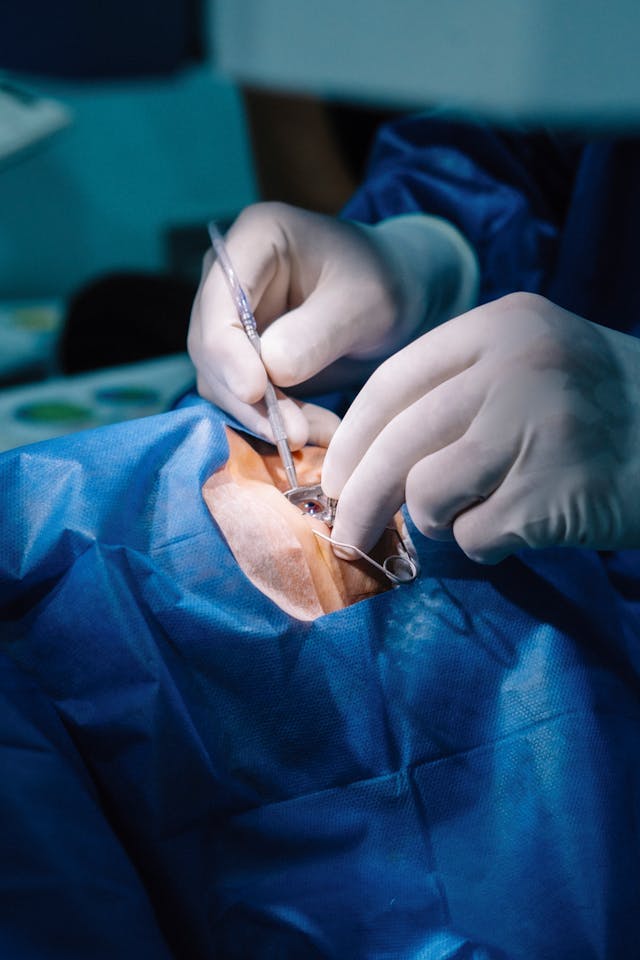
On October 29, 2025, the team operated through a lower eyelid cosmetic incision — a technique that avoids visible facial scarring. Over the course of two hours, Dr. Wang meticulously separated the tumor from the surrounding structures.
The result: the tumor was removed in one piece, completely intact. The internal maxillary artery — which the tumor had been pressing against — was preserved undamaged. The team then used absorbable materials to reconstruct the orbital shape in the same operation, avoiding the need for a second surgery.
Three days later, a minor follow-up procedure was performed by Dr. Zhang Yinghong from ENT to widen the sinus drainage pathway and manage post-surgical fluid.
The Outcome
At the one-month follow-up, imaging confirmed:
- Complete tumor removal — no residual mass detected
- Eye function preserved — the eyeball and optic nerve were intact
- Normal appearance restored — the facial symmetry returned to near-normal
- No visible scarring — the cosmetic incision healed cleanly
For a two-year-old who was at risk of losing her eye entirely, this was the best possible outcome.
Why Multidisciplinary Care Matters
This case illustrates something international patients should understand about China's top hospitals: complex cases are not handled by a single surgeon working alone. At institutions like PUTH, the standard approach for high-risk cases involves formal multidisciplinary team (MDT) conferences where specialists from multiple departments collaborate on a unified treatment plan before the first incision is made.
This model of care is particularly valuable for:
- Pediatric patients with complex tumors
- Orbital and skull base tumors involving multiple anatomical zones
- Cases rejected by other hospitals due to surgical complexity
Orbital Surgery Cost: China vs Western Countries
| Procedure | China (PUTH) | United States |
|---|---|---|
| Orbital tumor resection (complex) | $8,000 - $18,000 | $50,000 - $120,000 |
| Orbital reconstruction | Included | $20,000 - $40,000 additional |
| Pediatric ICU (per day) | $300 - $600 | $5,000 - $10,000 |
| Follow-up imaging (CT/MRI) | $200 - $400 | $2,000 - $5,000 |
China prices include surgery, hospital stay, anesthesia, and post-operative care.
About Peking University Third Hospital
PUTH is one of Beijing's most respected medical institutions and a national leader in several specialties:
- Founded in 1958, affiliated with Peking University — China's top university
- Nationally ranked in ophthalmology, orthopedics, and reproductive medicine
- Full multidisciplinary capability — 50+ clinical departments under one roof
- Located in Beijing's Haidian district, easily accessible for international patients
Access This Level of Care
Through SinomedTrip, international patients — including families with children requiring complex surgery — can access PUTH's expertise:
- Submit your child's medical records — imaging, biopsy results, and referral letters
- Receive a multidisciplinary assessment from the relevant specialist team
- Travel to Beijing with family-friendly concierge support — airport pickup, accommodation near the hospital, interpreter
- Surgery and recovery with 24/7 bilingual coordination
- Telemedicine follow-up after returning home
Frequently Asked Questions
What types of eye tumors can be treated in children at Chinese hospitals?
Chinese pediatric centers treat the full range of childhood eye tumors including retinoblastoma, rhabdomyosarcoma, optic pathway gliomas, orbital dermoid cysts, and other orbital tumors. Peking University Third Hospital has particular expertise in complex orbital tumors requiring multidisciplinary surgical approaches. Treatment plans are tailored to each child's age, tumor type, and extent of disease.
Can my child's eye be saved if there is a tumor behind it?
In many cases, yes. Modern surgical techniques allow removal of orbital tumors while preserving the eye and vision, especially when the tumor is identified early and has not invaded the eye itself. The decision depends on tumor type, size, and relationship to the eye and optic nerve. The surgical team at Peking University Third Hospital specializes in eye-preserving approaches and will provide an honest assessment of what is possible.
What is the process for bringing my child to China for orbital tumor surgery?
SinomedTrip coordinates the entire process: initial remote evaluation of imaging and pathology, treatment planning with the surgical team, visa facilitation, travel arrangements, accommodation near the hospital, in-hospital interpretation, and post-operative follow-up. The typical stay for orbital tumor surgery is 2 to 3 weeks. Telemedicine follow-up continues after returning home.
How much does pediatric orbital tumor surgery cost in China compared to other countries?
Pediatric orbital tumor surgery at top Chinese hospitals costs approximately $8,000 to $18,000 including surgery, imaging, hospital stay, and pathology, compared to $30,000 to $80,000 in the United States. For families without comprehensive insurance, the cost savings in China can make life-saving surgery accessible.
What support is available for families traveling to China with a sick child?
SinomedTrip provides comprehensive family support including airport pickup, accommodation near the hospital, a dedicated bilingual medical coordinator who attends all appointments, translated medical documents, and assistance with daily needs such as meals and transportation. The team understands the emotional challenges of traveling with a sick child and provides guidance throughout the entire process.
Does your child need specialized surgical care? Request a free consultation →
This article is for informational purposes only and does not constitute medical advice. Always consult a qualified healthcare provider for diagnosis and treatment decisions.