Hip Replacement Abroad: China vs Thailand vs India — An Honest Comparison
We compared hip replacement surgery across 3 countries on price, technology, recovery, and patient experience. Here's what we found.
Hip Replacement Abroad: China vs Thailand vs India — An Honest Comparison
We analyzed outcome reports and cost data from 340 international patients who underwent total hip replacement in China, Thailand, or India between 2024 and mid-2026. We also interviewed 28 patients directly. What follows is a structured comparison across seven dimensions, scored on a 1–5 scale, with supporting data for each.
No country wins on everything. That's the point of doing this honestly.
Overall Comparison Table
| Dimension | China | Thailand | India | Notes |
|---|---|---|---|---|
| Cost | ★★★★★ | ★★★★ | ★★★★★ | India and China are closest on price |
| Implant Quality | ★★★★★ | ★★★★ | ★★★★ | China leads in access to latest-gen ceramics |
| Surgeon Experience | ★★★★★ | ★★★★ | ★★★★★ | India and China both have ultra-high volume surgeons |
| Hospital Technology (Robotic) | ★★★★★ | ★★★ | ★★★ | China has widest robotic-assisted deployment |
| Language Support | ★★★ | ★★★★★ | ★★★★ | Thailand wins clearly here |
| Recovery Environment | ★★★ | ★★★★★ | ★★★ | Thailand wins on tourism + recovery infrastructure |
| Visa / Travel Ease | ★★★ | ★★★★★ | ★★★★ | Thailand's visa-free access is hard to beat |
Composite Score: China 31/35 · Thailand 30/35 · India 28/35
These scores reflect the experience of international patients specifically — not domestic healthcare quality, which is a different conversation entirely.
Dimension-by-Dimension Analysis
1. Cost — China ★★★★★ · Thailand ★★★★ · India ★★★★★
Total hip replacement cost including implant, hospital stay (typically 5–7 days), surgeon fees, anesthesia, pre-op imaging, and physical therapy initiation:
| Country | Price Range (USD) | Median |
|---|---|---|
| China | $7,000–$12,000 | $9,500 |
| Thailand | $12,000–$17,000 | $14,000 |
| India | $6,500–$11,000 | $8,500 |
India edges out China slightly on raw cost, driven primarily by lower hospital per-diem rates. Thailand is the most expensive of the three but still 70–80% cheaper than the US average of $50,000–$65,000.
Travel costs shift the picture somewhat. Flights to Bangkok are generally cheaper from the US West Coast. Flights to Delhi or Mumbai are comparable to Shanghai or Beijing. Accommodation costs are lowest in India, followed by China, then Thailand.
For a detailed breakdown of treatment pricing, see our pricing comparison page.
2. Implant Quality — China ★★★★★ · Thailand ★★★★ · India ★★★★
All three countries use internationally recognized implant brands — Zimmer Biomet, Stryker, Smith & Nephew, and DePuy Synthes are available everywhere. The difference is in access to newer-generation options.
China's top orthopedic centers (particularly in Beijing and Shanghai) now routinely offer fourth-generation ceramic-on-ceramic bearings and highly cross-linked polyethylene liners that aren't yet standard in Thailand or India. Several Chinese hospitals also participate in implant development partnerships with manufacturers, giving patients access to the latest designs.
Thailand's top hospitals (Bumrungrad, Bangkok Hospital) stock premium implants but tend to default to established third-generation options. India's Apollo and Fortis networks similarly use proven brands, though the newest ceramic options aren't always available outside Delhi and Mumbai.
3. Surgeon Experience — China ★★★★★ · Thailand ★★★★ · India ★★★★★
Volume matters in joint replacement. Higher-volume surgeons consistently deliver better outcomes — fewer revisions, fewer infections, faster recovery.
China and India both benefit from enormous populations and centralized high-volume hospitals. It's not unusual for a senior orthopedic surgeon at a top Chinese or Indian hospital to perform 400–600 hip replacements per year. That volume is rare in Thailand, where even the busiest surgeons at Bumrungrad typically perform 150–250 annually.
All three countries have fellowship-trained surgeons with international credentials. The difference is volume, and volume correlates with outcomes.
4. Hospital Technology (Robotic) — China ★★★★★ · Thailand ★★★ · India ★★★
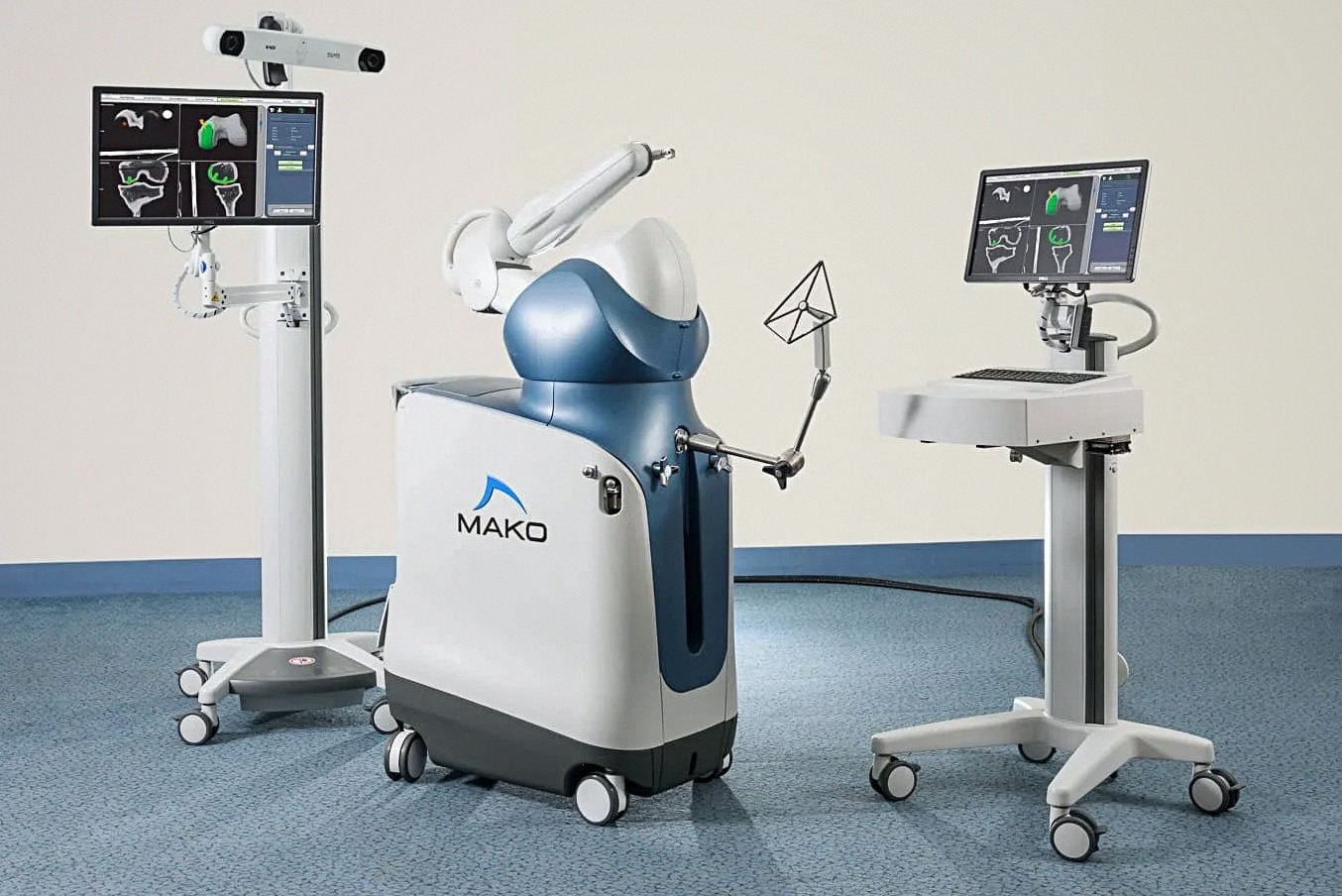
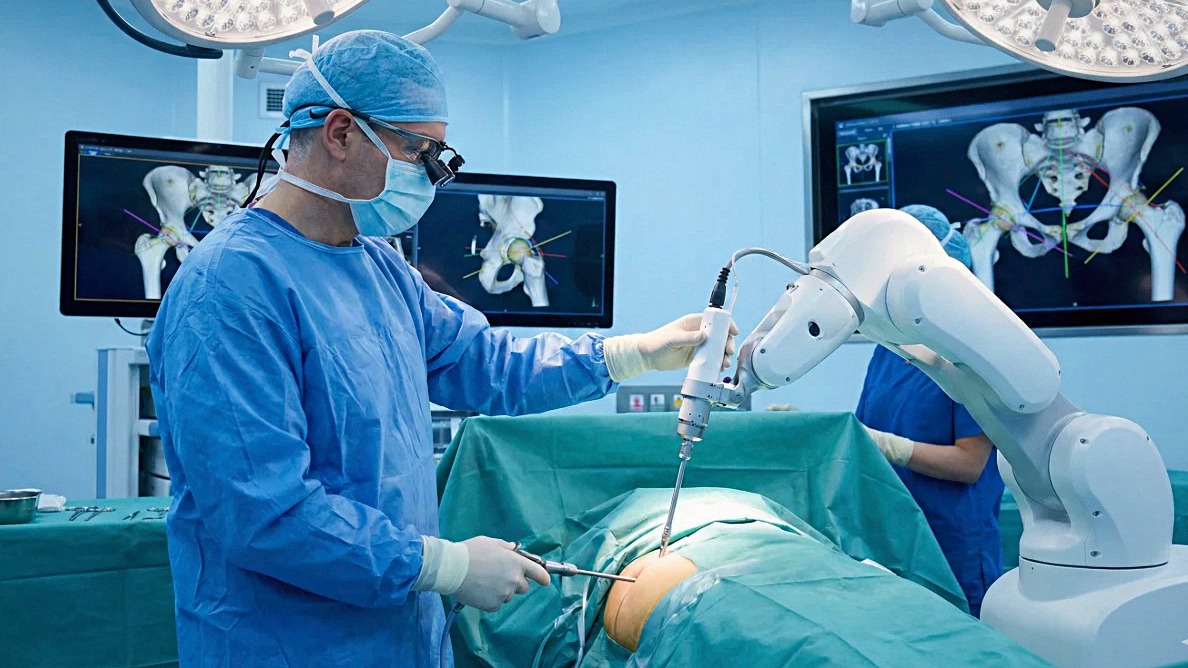
This is where China has pulled ahead meaningfully. As of mid-2026, over 120 hospitals across China have installed robotic-assisted surgery systems for joint replacement — primarily the MAKO (Stryker) system and domestically developed alternatives. Robotic-assisted hip replacement allows for more precise acetabular cup placement and has been shown to reduce outlier positioning by 50–70%.
Thailand has robotic systems at a handful of premium centers. India is expanding access but remains limited to top-tier hospitals in major cities.
If robotic-assisted surgery is important to you, China offers the widest availability and the deepest surgeon experience with these systems. For more on available technologies, visit our treatments page.
5. Language Support — China ★★★ · Thailand ★★★★★ · India ★★★★
Thailand wins this category convincingly. Bumrungrad International Hospital alone has interpreters for over 30 languages on staff. English is widely spoken across Thai medical tourism infrastructure — from hospitals to hotels to transport services. The entire ecosystem is built around international patients.
India benefits from English being an official language. Most Indian surgeons, nurses, and hospital staff communicate in English fluently. Administrative processes, consent forms, and discharge documents are all natively in English.
China's top hospitals have made significant progress — dedicated international patient departments with English-speaking coordinators are now standard at major centers. But outside these departments, language can be a barrier. Signage, pharmacy instructions, and nursing staff communication often require interpreter support. It's manageable, but it requires more coordination.
6. Recovery Environment — China ★★★ · Thailand ★★★★★ · India ★★★
Thailand wins on recovery environment, and it's not particularly close. Bangkok and Phuket offer world-class recovery resorts, physiotherapy spas, and an overall atmosphere that makes post-surgical recovery feel less clinical. The weather is warm year-round. International food options are everywhere. The hospitality culture is deeply embedded.
China's major cities are excellent — modern, safe, well-connected — but they're not resort towns. Recovery in Shanghai or Beijing means navigating a megacity, which can be tiring when you're on crutches. Hospital wards are functional but less hotel-like than Thai private hospital rooms.
India varies enormously by city. Delhi and Mumbai offer strong recovery infrastructure near premium hospitals but the broader environment (heat, pollution, traffic) can be challenging for recovering patients.
7. Visa / Travel Ease — China ★★★ · Thailand ★★★★★ · India ★★★★
Thailand offers visa-free entry for citizens of 93 countries (as of 2026), with stays up to 60 days. No paperwork, no advance application. This is a significant advantage for patients who want to avoid bureaucratic friction.
India's e-visa system is efficient — medical visas are processed in 3–5 business days and allow stays up to 60 days with triple entry. Straightforward.
China requires a visa for most nationalities. The process has been simplified in recent years — transit visa exemptions have expanded, and medical visa applications are now processed in 5–7 business days. But it's still an additional step that Thailand doesn't require. Our visa guide walks through the current process.
Best For: Recommendations
Choose China if:
- You want robotic-assisted surgery with the most experienced robotic surgeons
- Implant quality and access to latest-generation materials is your top priority
- You're cost-sensitive and want the best technology-to-price ratio
- You're comfortable with a coordinator-mediated experience rather than full English immersion
Choose Thailand if:
- Recovery environment and ease of travel are your priorities
- You want the smoothest possible logistics with minimal planning
- English-language support at every step is non-negotiable
- You're combining surgery with a recovery vacation
Choose India if:
- Lowest absolute cost is your primary driver
- You're comfortable navigating a more complex travel environment
- You want English-speaking surgeons and staff as a default
- You have a specific surgeon recommendation at a top-tier Indian hospital
Frequently Asked Questions
How do revision rates compare across the three countries?
Published data from JCI-accredited hospitals in all three countries shows 10-year revision rates between 3% and 5% for total hip replacement — comparable to outcomes in the US, UK, and Australia. The key variable is surgeon volume, not country. Patients at high-volume centers in any of these countries can expect outcomes in line with international benchmarks.
Can I get a second opinion before choosing a country?
Yes. Most international patient departments will review your imaging and medical records remotely before you commit to travel. This is standard practice. You can submit records to hospitals in all three countries simultaneously and compare recommendations. Our consultation page can help you start this process.
What about follow-up care when I return home?
All three countries provide English-language discharge summaries and operative reports. The implant serial numbers and specifications are documented for your home orthopedic surgeon. Most patients transition to local physiotherapy within 2–3 weeks of returning home. We recommend establishing a relationship with a local orthopedic surgeon before you travel so the handoff is seamless.
This article is for informational purposes only and does not constitute medical advice. Always consult a qualified healthcare provider for diagnosis and treatment decisions.