I Got Both Knees Replaced in China at 64 — My 3-Week Recovery Journal
A retired engineer from Texas shares his bilateral knee replacement experience at a Xi'an hospital. Day-by-day recovery, costs, and surprises.
I Got Both Knees Replaced in China at 64 — My 3-Week Recovery Journal
There's a ceiling tile directly above bed 3B in the orthopedic recovery ward of Xi'an International Medical Center. It has a small crack shaped like the state of Florida. I know this because I spent about four hours staring at it while the anesthesia wore off, unable to feel anything below my waist and wondering, with genuine sincerity, what exactly I'd gotten myself into.
Both knees. Done at the same time. In China.
My wife Linda said it was the most impulsive decision I'd made in 42 years of marriage. She's not wrong. But I'd spent three of those years hobbling around our house in Austin, wincing every time I stood up from a chair. Bone-on-bone, both sides. My orthopedist back home wanted $48,000 per knee after insurance — that's $96,000 for both, and he wanted to do them six months apart. A full year of recovery. At 64, I didn't have a year to give up.
A buddy from my old engineering firm had his hip done in Xi'an through SinomedTrip. He wouldn't stop talking about it. Sent me photos of the hospital, his surgeon's credentials, his bill. The bill is what got me. So I reached out.
Week 1: Surgery and First Steps
Day 0 — Surgery Day
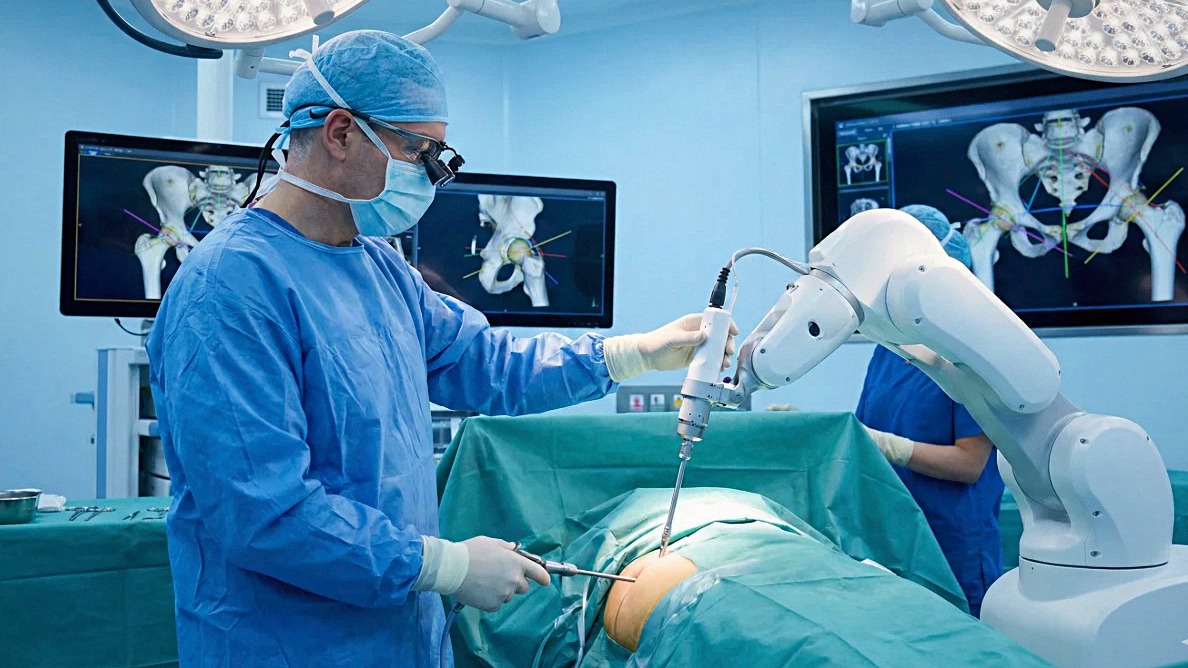
Checked in at 6 AM. The hospital looked nothing like what I expected. Modern. Gleaming floors. The pre-op area had individual bays with curtains, not some open ward. My surgeon, Dr. Liu, came by at 7:15. He'd done over 2,000 knee replacements. I asked him how many bilateral cases — he said around 400. That calmed me down more than the sedative they gave me ten minutes later.
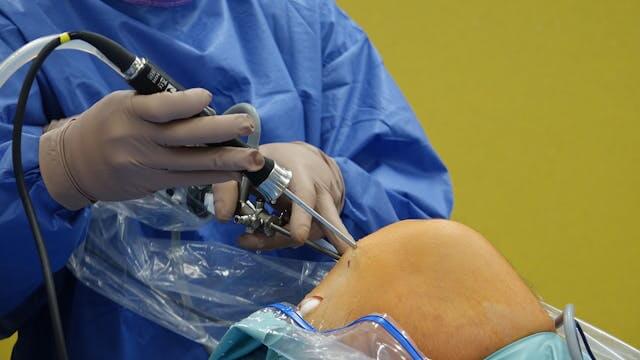
The procedure took about three and a half hours. I don't remember anything after counting backward from ten. Next thing I knew: ceiling tile, Florida-shaped crack, and a nurse adjusting something on my IV.
Day 1 — The Realization
Woke up properly. Both legs were wrapped in compression bandages and propped on foam wedges. They had these inflatable cuffs on my calves that squeezed rhythmically — blood clot prevention, they told me. I could wiggle my toes. That felt like an achievement.
The pain wasn't as bad as I'd feared. They had me on a nerve block plus IV painkillers. On a scale of one to ten, I'd say a four. Manageable. The harder part was the helplessness. I needed a nurse to help me use a bedpan. That's humbling at any age.
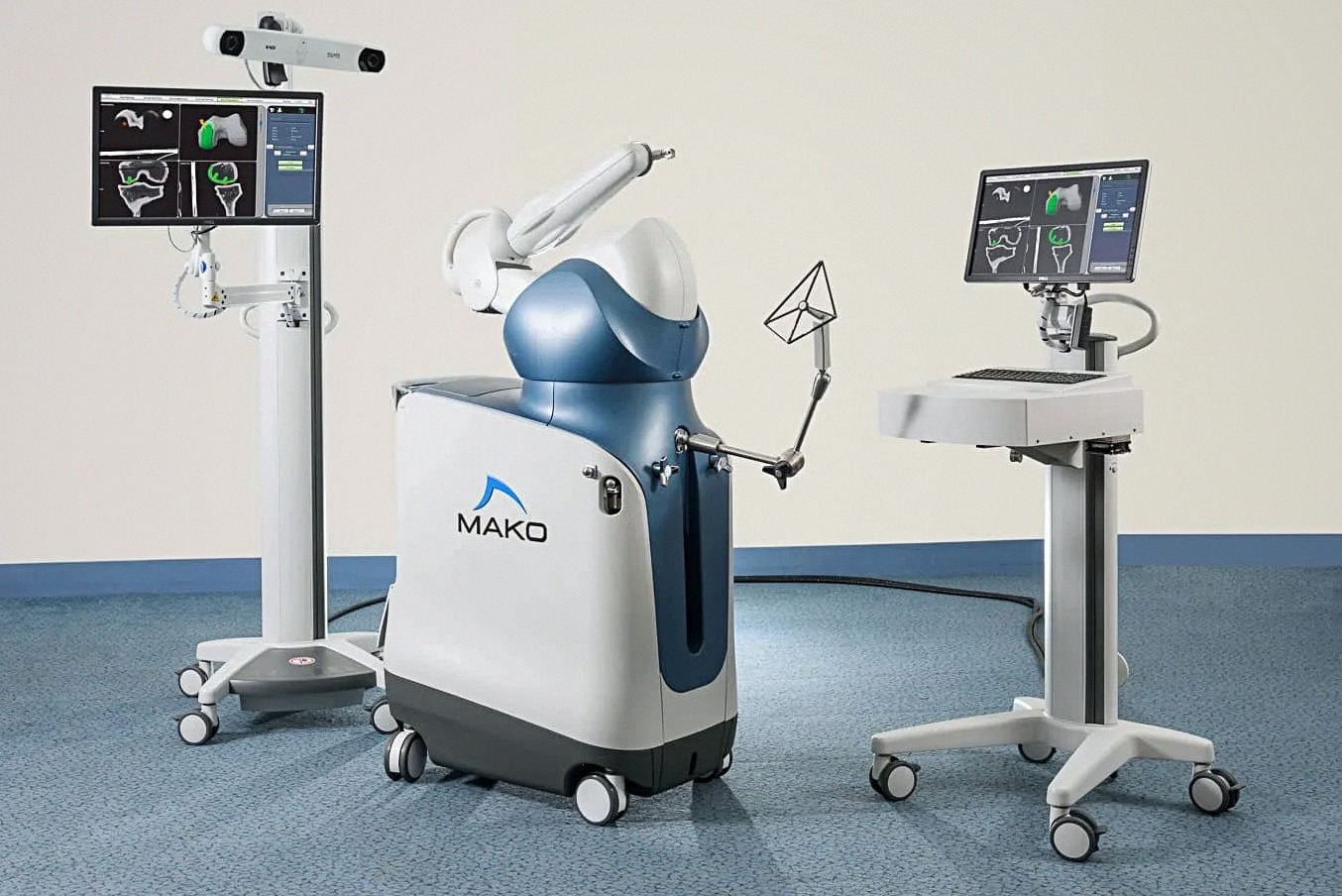
Dr. Liu came by in the afternoon and said everything went smoothly. Smith & Nephew implants — British-made, same brand my surgeon in Austin uses. He showed me the post-op X-rays on his tablet. Two shiny new knees. Looked like something from a hardware store.
Day 2 — The Bad Night
Let me be straight about this part: Day 2 was rough. The nerve block wore off around midnight, and I went from a four to an eight on the pain scale within an hour. The night nurse adjusted my meds, but it took a while to kick in. I lay there for two hours, sweating, unable to find a position that didn't hurt. Linda was asleep on the fold-out chair next to my bed, and I didn't want to wake her.
Around 3 AM the new dose finally hit and I drifted off. But those two hours were the worst of the whole trip. I won't sugarcoat it.
Day 3 — Standing
The physiotherapist, a young woman named Xiao Wei, showed up at 9 AM with a walker and a no-nonsense attitude. She wanted me standing. I thought she was joking. She was not.
It took two people to get me upright. My legs felt like they belonged to someone else — heavy, swollen, reluctant. But I stood. For about thirty seconds, gripping that walker like my life depended on it, legs shaking, grinning like an idiot. Linda took a photo. I look terrible in it. I love that photo.
Days 4-7 — Shuffling
By Day 4, I was taking short walks down the corridor with the walker. Ten meters, then rest. Fifteen meters. Twenty. Xiao Wei came twice a day for range-of-motion exercises — gentle bending, straightening, ankle pumps. She was patient but firm. "More bend, Mr. Robert," she'd say. "You can do more."
The swelling was significant. My knees looked like grapefruits. They had ice packs on me constantly and my legs were elevated whenever I was in bed. Pain settled to a three or four with medication. I was sleeping better by Day 6.
Food was surprisingly good. The hospital had a Western menu option — nothing fancy, but scrambled eggs, toast, soup, grilled chicken. Linda walked to a nearby mall and brought back McDonald's one afternoon. Never thought a Big Mac would taste that good.
Week 2: Physiotherapy Gets Real
Days 8-10 — Walking Frame Life
Moved from the walker to a walking frame. The difference sounds small but felt enormous. I was covering the full length of the ward corridor — maybe 80 meters — without stopping. Xiao Wei started stair training on Day 9. One step up, one step down. Over and over. My quads burned.
The staples came out on Day 10. Twenty-two staples per knee. I watched the nurse pull them out one by one. Didn't hurt, just a weird tugging sensation. The scars were clean and straight. Dr. Liu said the incisions looked excellent.
Days 11-14 — Bending Past 90 Degrees
This was the milestone everyone kept mentioning. Ninety degrees of flexion. Xiao Wei worked on it every session — passive bending, then active, then assisted stretches. On Day 12, my right knee hit 92 degrees. Left was stubbornly stuck at 85. By Day 14, both were past 95. Xiao Wei actually clapped.
I was getting restless by this point. The hospital room was comfortable — private, with a bathroom and a window overlooking a garden — but I'd been inside for two weeks. Linda went out exploring Xi'an. She came back with photos of the Terracotta Warriors and said I wasn't missing much in terms of weather (hot, dusty). Easy for her to say.
The hospital had a small outdoor courtyard for rehab patients. I started doing my walks out there in the mornings. Fresh air made everything better.
Week 3: Stairs, Freedom, and Going Home
Days 15-18 — Real Movement
Switched to two canes. Walking felt almost normal, if slow. Xiao Wei had me doing leg presses on a machine in the physio gym, bodyweight squats holding a rail, and stationary bike with no resistance. My knees were still swollen but noticeably less. Pain was a one or two most of the time, occasionally a three after hard physio sessions. I'd stopped the strong painkillers and was just on anti-inflammatories.
The other patients in the ward were mostly Chinese, but there was a Canadian woman recovering from a hip replacement and a guy from Dubai with an ACL reconstruction. We'd do our corridor walks together and compare notes. Strange little community.
Days 19-21 — Discharge
Dr. Liu did a final assessment on Day 20. Both knees had 110 degrees of flexion. I could walk with one cane. I could climb and descend stairs slowly but steadily. He said I was ahead of schedule, which I credit entirely to Xiao Wei's refusal to let me slack off.
They gave me a discharge packet: exercise protocols for the next three months, medication schedule, emergency contact numbers, a USB drive with all my imaging and surgical records. Very organized.
On Day 21, I walked out of that hospital on two canes, got into a car, and went to the airport. Linda and I flew home through Seoul. I splurged on business class for the legroom. Worth every penny.
The Bill
Here's the part everyone wants to know. Total cost for bilateral knee replacement at Xi'an International Medical Center:
- Surgery and implants (both knees, Smith & Nephew): $14,200
- Hospital stay (21 nights, private room): $3,800
- Physiotherapy (twice daily, 21 days): $2,100
- Medications, imaging, labs: $1,400
- Coordinator and translation services: $500
Total: $22,000 for both knees, including everything.
My quote back in Austin was $96,000 for both knees done separately. Even if I factor in flights ($2,400 for two people round trip) and Linda's hotel nearby ($1,100 for three weeks), I spent roughly $25,500. That's a savings of over $70,000.
Six Months Later
I'm writing this from my garage workshop, standing at my workbench. I walk two miles every morning with Linda. I can get up from a chair without groaning. I went fishing last month and stood in the river for three hours without pain.
My knees aren't perfect — they're artificial joints, and they feel like it sometimes, especially in cold weather. But they work. I can live my life again. If you're considering this and you're on the fence, I'd say reach out for a consultation and at least get the information. That's what I did. And I'd do it again tomorrow.
One thing I will say: bring something to stare at on the ceiling. You'll be doing a lot of that on Day 1.
This article is for informational purposes only and does not constitute medical advice. Always consult a qualified healthcare provider for diagnosis and treatment decisions.