Q&A with an Eye Surgeon: What Foreign Patients Should Know About LASIK in China
We sat down with a refractive surgeon at a top Shanghai eye center. His answers might surprise you.
Dr. Wang Junfeng has performed over 12,000 refractive surgeries in 18 years at one of Shanghai's leading eye centers. He trained at Fudan University, completed a fellowship at Moorfields Eye Hospital in London, and currently serves as deputy director of the Refractive Surgery Department. We sat down with him to ask the questions foreign patients actually want answered.
Q: Let's start with the question everyone asks first — how much does LASIK cost in China for a foreign patient?
A: I'll give you real numbers. For standard femtosecond LASIK, you're looking at $1,000 to $1,400 per eye. For SMILE Pro — which is our most advanced option — it's $1,400 to $1,800 per eye. That includes the pre-operative screening, the procedure itself, and your first three follow-up visits. There are no hidden fees. We quote the full price upfront and it's the same price we charge domestic patients. If you compare that to $2,500 to $4,000 per eye in the United States or $3,000 to $5,000 in Australia, the savings are significant — even after you factor in flights and a hotel. You can check the full pricing comparison on our pricing page.
Q: You mentioned SMILE Pro. What's the difference between SMILE and traditional LASIK?
A: Traditional LASIK creates a flap in the cornea, lifts it, reshapes the tissue underneath with an excimer laser, then puts the flap back. It works well — it's been refined over decades. SMILE is fundamentally different. We use a femtosecond laser to create a tiny disc of tissue called a lenticule inside the cornea, then extract it through a 2-4mm incision. No flap. SMILE Pro is the latest generation — it's the Zeiss VisuMax 800 platform. The laser portion takes about 10 seconds per eye. Because there's no flap, there's less risk of dry eye afterward and the cornea retains more structural strength. For patients who are active — runners, swimmers, people who play contact sports — SMILE is usually what I recommend.
Q: How do I know if I'm a good candidate? Who should NOT get LASIK?
A: This is the most important question, and I wish more patients asked it before they booked flights. Not everyone is a candidate. I turn away roughly 15-20% of the people I screen. You're not a candidate if your cornea is too thin — we need enough tissue to safely reshape without compromising structural integrity. You're not a candidate if you have keratoconus or suspected keratoconus. If your prescription has changed in the last year, you need to wait until it stabilizes. Autoimmune conditions like lupus or rheumatoid arthritis are usually disqualifiers because healing is unpredictable. Severe dry eye disease needs to be managed before we'll proceed. And if you're pregnant or nursing, we'll ask you to come back later because hormonal changes affect your prescription.
I'd rather tell someone no than perform surgery that gives a poor result. That's why we offer a thorough pre-operative screening — it takes about two hours and involves 20+ measurements of each eye. If you're not sure whether you qualify, you can request a free consultation before traveling.
Q: What does the actual procedure day look like?
A: You arrive at the clinic, we do a final check of your measurements, and you'll get numbing drops — no injections, no sedation. You walk into the laser suite, lie down, and the procedure itself takes about 15 minutes for both eyes. With SMILE Pro, the laser time is around 10 seconds per eye. The rest is positioning and verification. Afterward, you'll rest in a dim room for 30 minutes while we make sure everything looks good. You go home wearing protective goggles. Most patients tell me they can already see the clock on the wall before they leave the clinic.
Q: When can I fly home?
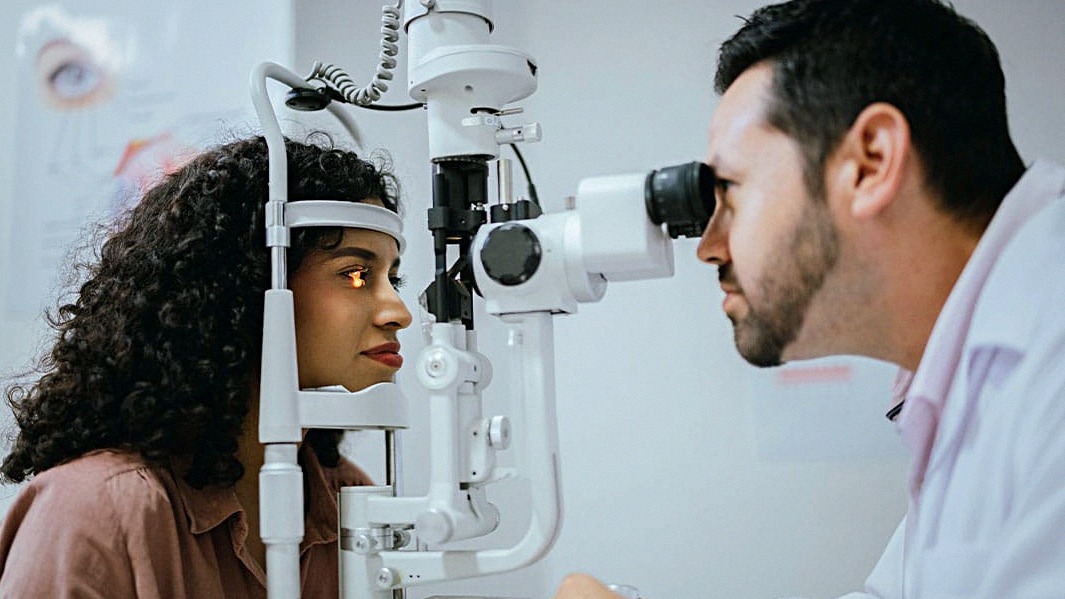
A: This is the question I get from every international patient. I prefer that you wait 3-5 days before flying. The cabin pressure on an airplane isn't a problem — that's a common myth. The issue is dry air in the cabin and the fact that I want to see you for at least one follow-up before you leave. We check your vision, measure your eye pressure, and examine the cornea under a slit lamp. If everything looks normal at the day-three follow-up, I'm comfortable with you flying. I do recommend preservative-free artificial tears during the flight and keeping your eyes closed as much as possible.
Q: What happens during recovery? How soon can I work?
A: Most patients return to computer work within 2-3 days. Your vision may fluctuate slightly for the first week — that's normal. You might experience some glare or halos around lights at night for the first month, but these diminish as the cornea heals. You'll use antibiotic drops for a week and anti-inflammatory drops for 2-4 weeks. No swimming for two weeks. No rubbing your eyes for a month. I tell patients to think of it as a mild inconvenience, not a recovery. You won't be bedridden. You can walk around, eat normally, travel within the city. Just don't get soap or water directly in your eyes for the first few days.
Q: Let's talk about safety. What's the complication rate?
A: For SMILE and femtosecond LASIK at our center, the rate of serious complications — meaning something that permanently affects vision — is below 0.1%. That's consistent with published data from large studies worldwide. The most common issue is temporary dry eye, which affects maybe 20-30% of patients to some degree in the first three months. It resolves on its own in the vast majority of cases. Under-correction or over-correction happens occasionally — if needed, we can do an enhancement procedure after the eye has fully stabilized, usually at six months. I've never had a patient lose best-corrected vision from a refractive procedure.
The key to safety isn't just the surgeon — it's the screening. Most complications in LASIK happen when patients who shouldn't have been candidates were operated on anyway. That's why I'm strict about who I say yes to.
Q: What if the surgery doesn't give me perfect vision? What's the plan?
A: We aim for 20/20 or better. About 95% of our patients achieve that. Another 4% get to 20/25, which is still excellent — most of those patients choose not to wear glasses. If you're in the small group that's under-corrected, we discuss an enhancement. An enhancement is essentially a touch-up procedure, and it's included in our pricing if done within the first year. I want to be honest though: there's a small chance — maybe 1 in 200 — that you'll end up with a result you're not completely satisfied with even after enhancement. Medicine isn't a guarantee. But the odds are overwhelmingly in your favor.
Q: How do I get started as a foreign patient? What's the process?
A: The simplest path is to submit your current prescription and any recent eye exam records through SinomedTrip. Their team will forward everything to us, and I or one of my colleagues will review it within 48 hours. If you look like a reasonable candidate on paper, we'll schedule your visit. When you arrive in Shanghai, the screening happens on day one, surgery on day two if you pass, and your first follow-up on day three or four. So you're looking at a 5-7 day trip total. SinomedTrip handles the appointment scheduling, hospital registration, and provides a medical interpreter who'll be with you at every visit. You can learn more about the full process at how it works.
Q: Last question — why should someone fly to China for this instead of doing it at home?
A: I'm not going to tell you everyone should come to China for LASIK. If you have good insurance that covers it, or if you have a surgeon you trust at home, do it there. But there are real reasons people come here. The cost savings are substantial — even with travel, most patients save 40-60% compared to the US, UK, or Australia. The technology is identical or newer — we have the same Zeiss and Alcon platforms, and in some cases we get the latest generation hardware before it's approved in other countries. And the volume matters. A surgeon who does 800 procedures a year has a different level of pattern recognition than one who does 100. That experience shows up in outcomes.
What I'd say is: do your research, ask hard questions, and don't choose based on price alone. The cheapest option isn't always the best. But if you're comparing a high-volume, well-equipped center in China to a comparable one in the West, the clinical outcomes are equivalent — and the cost difference is real.
Interested in LASIK or SMILE surgery in China? You can request a free consultation to find out if you're a candidate. Our team will connect you with a screened ophthalmology center and provide a personalized cost estimate within 48 hours.
This article is for informational purposes only and does not constitute medical advice. Always consult a qualified healthcare provider for diagnosis and treatment decisions.