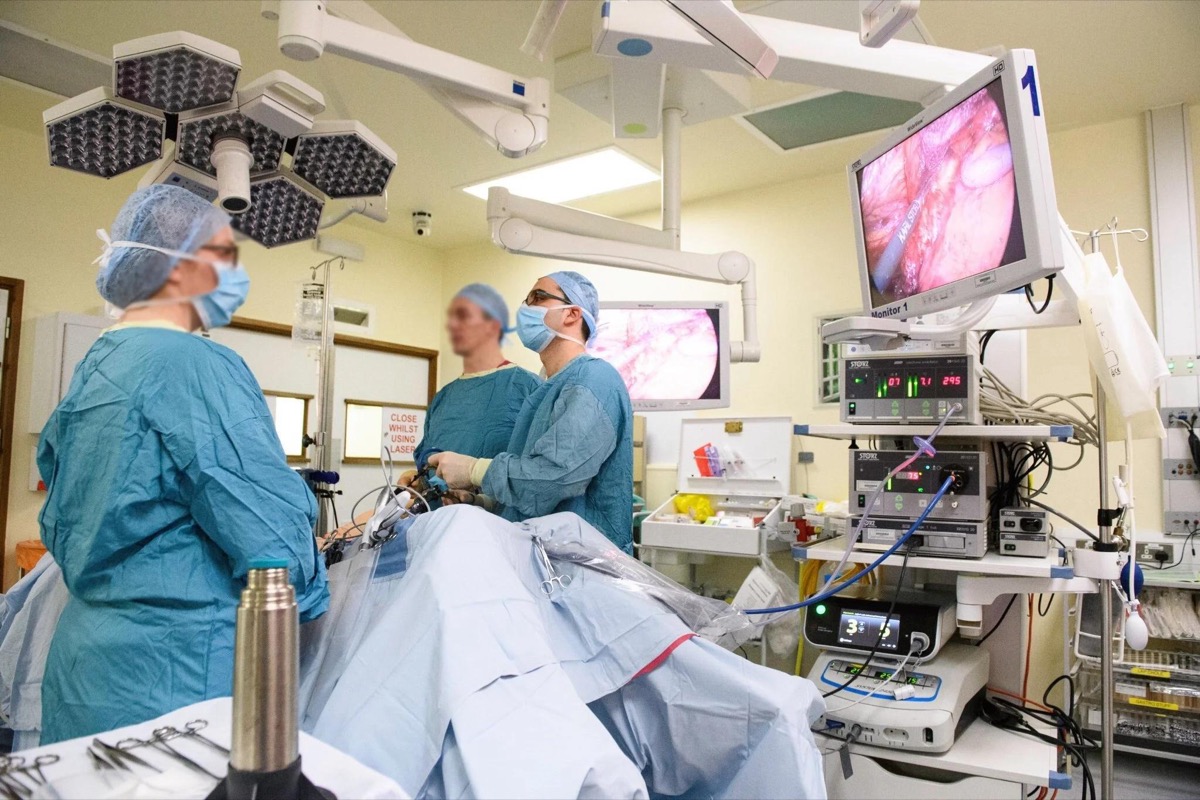
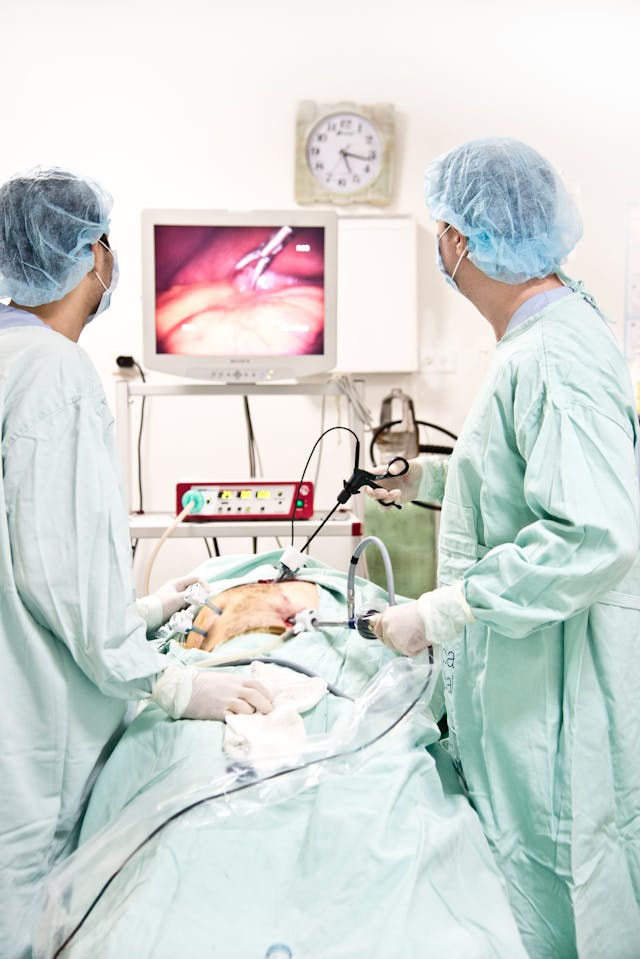
Bladder Cancer in the Hardest Spot to Operate: How Tangdu Hospital Removed the Tumor and Saved the Bladder
A patient with bladder cancer at the trigone — the most surgically dangerous zone — underwent robotic partial cystectomy with bilateral ureteral reimplantation at Tangdu Hospital, preserving his bladder and kidney function entirely.
A Year of Blood in His Urine — Then a Diagnosis in the Worst Possible Location
For a full year, Mr. Fu ignored the blood in his urine. When he finally sought medical attention, the diagnosis was devastating: bladder cancer. But the location of the tumor made the situation far worse than a typical bladder cancer case.
The tumor sat directly on the bladder trigone — the triangular region at the base of the bladder where both ureters (the tubes draining urine from the kidneys) enter. This is the single most dangerous location for bladder cancer surgery because:
| Challenge | Why It Matters |
|---|---|
| Ureteral openings at risk | Removing the tumor means cutting near or through the ureteral connections — potentially severing the drainage from both kidneys |
| Bladder removal often required | Most hospitals would perform a radical cystectomy (complete bladder removal) for trigone tumors |
| Urinary diversion needed | Without a bladder, patients need an external urostomy bag or complex internal reconstruction |
| Quality of life devastated | Losing the bladder fundamentally changes daily life — permanent bags, sexual dysfunction, body image issues |
At most hospitals worldwide, Mr. Fu would have been told: "We need to remove your entire bladder."
He was referred to Tangdu Hospital (Air Force Medical University, Xi'an), where the urology team had a different plan.
The Tangdu Approach: Remove the Cancer, Keep the Bladder
Dr. Ma Xin, Chief Physician of Urology and doctoral supervisor, led the surgical team in a complex multi-step procedure that achieved what most centers would not attempt:
Step 1 — Robotic partial cystectomy
Using robotic-assisted laparoscopic surgery, the team precisely excised the tumor along with the affected portion of the bladder wall — including the trigone region — while preserving the remainder of the bladder.
Step 2 — Bilateral ureteral reimplantation
With the trigone removed, both ureteral openings were lost. The surgical team reimplanted both ureters into the preserved bladder wall — creating new, functional connections that would allow urine to drain normally from both kidneys.
Step 3 — Bladder reconstruction
The remaining bladder was reconstructed to maintain adequate capacity and function, ensuring the patient could urinate normally without any external collection devices.
Why Most Hospitals Won't Attempt This
Bladder-preserving surgery for trigone tumors is technically extraordinarily demanding:
- The ureters are only 3-4mm in diameter — reimplanting them requires microsurgical precision
- Both ureters must be reimplanted simultaneously — failure of either connection means kidney damage
- The anastomosis must be watertight — any leak causes urine to spill into the abdomen
- Cancer margins must be completely clear — incomplete resection means the cancer returns
- The reconstructed bladder must maintain adequate volume and compliance for normal urination
The easier, safer choice for the surgeon is to remove the entire bladder. But the easier choice for the surgeon is the devastating choice for the patient.
The Outcome
Mr. Fu's surgery was successful on every measure:
- Tumor completely removed with clear surgical margins
- Both ureters reimplanted and functioning — bilateral kidney drainage preserved
- Bladder preserved — normal urination restored
- No external bags or stomas — quality of life maintained
- Patient discharged with normal renal function on follow-up imaging
Bladder-Preserving vs. Radical Cystectomy
| Factor | Bladder Preservation (Tangdu) | Radical Cystectomy (Standard) |
|---|---|---|
| Bladder | Preserved | Completely removed |
| Urination | Normal | External bag or neobladder (complex reconstruction) |
| Kidney function | Preserved via reimplantation | Preserved but rerouted |
| Sexual function | Better preserved | High risk of erectile dysfunction |
| Body image | No external changes | Permanent stoma possible |
| Recovery | Faster | Longer, more complex |
| Surgical difficulty | Extremely high | High but standard |
Bladder Cancer Surgery Cost: China vs Western Countries
| Procedure | China (Tangdu Hospital) | United States |
|---|---|---|
| Robotic partial cystectomy + ureteral reimplantation | $10,000 - $20,000 | $50,000 - $100,000 |
| Radical cystectomy with neobladder | $15,000 - $28,000 | $60,000 - $130,000 |
| Radical cystectomy with ileal conduit | $12,000 - $22,000 | $50,000 - $110,000 |
| TURBT (transurethral resection) | $2,000 - $5,000 | $10,000 - $25,000 |
China prices include surgery, robotic platform usage, hospital stay, and post-operative imaging.
Who Should Consider Bladder-Preserving Cancer Surgery?
This approach is relevant for patients with:
- Bladder cancer at the trigone — The exact scenario where preservation is hardest but most valuable
- Localized muscle-invasive bladder cancer — Where partial cystectomy is oncologically feasible
- Strong preference for bladder preservation — Patients who prioritize quality of life
- Patients told they need radical cystectomy — A second opinion may reveal preservation options
About Tangdu Hospital Urology
Tangdu Hospital's urology department is a national leader in urological surgery:
- Dr. Ma Xin — Chief Physician, PhD, doctoral supervisor with extensive robotic urological surgery experience
- Full robotic surgical capability for complex urological reconstruction
- Affiliated with Air Force Medical University — one of China's top military medical universities
- Located in Xi'an — SinomedTrip's home city, enabling seamless coordination for international patients
Frequently Asked Questions
What is the trigone and why is bladder cancer there so difficult to treat?
The trigone is the triangular area at the base of the bladder where the two ureters (tubes from the kidneys) and the urethra (tube to the outside) connect. Cancer in this location is challenging because removing it risks damaging these critical structures, often leading surgeons to recommend total bladder removal. Tangdu Hospital's approach preserves the bladder while completely removing the tumor.
Can I keep my bladder if I have bladder cancer in the trigone region?
Bladder preservation for trigone tumors is possible at experienced centers like Tangdu Hospital, though it depends on tumor size, stage, and whether the cancer has invaded surrounding structures. The surgical team uses robotic-assisted techniques to precisely remove the tumor while reconstructing the bladder's drainage system. A detailed evaluation of your imaging and pathology is needed to determine eligibility.
How long is the recovery after bladder-preserving surgery for trigone cancer?
Most patients stay in the hospital for 7 to 14 days after bladder-preserving trigone surgery. A urinary catheter remains in place for 1 to 2 weeks while the surgical site heals. Full bladder function typically returns within 4 to 8 weeks, and most patients report normal urination patterns by 3 months after surgery.
What are the advantages of bladder-preserving surgery compared to full bladder removal?
Bladder-preserving surgery maintains your natural urinary function, avoids the need for a urostomy bag or neobladder reconstruction, preserves sexual function, and significantly improves quality of life after treatment. Recovery is also shorter compared to radical cystectomy. However, not all patients are candidates, and careful follow-up surveillance is essential to monitor for recurrence.
How much does bladder cancer surgery cost at Tangdu Hospital compared to Western countries?
Bladder-preserving surgery at Tangdu Hospital typically costs $8,000 to $18,000 including surgery, hospital stay, and follow-up, compared to $30,000 to $80,000 in the United States for similar procedures. Radical cystectomy costs $15,000 to $25,000 in China versus $50,000 to $120,000 in the US.
What follow-up care is needed after bladder-preserving cancer surgery?
After bladder-preserving surgery, patients need regular cystoscopy examinations every 3 to 6 months for the first two years, then annually. Imaging studies and urine cytology are also performed periodically. The initial follow-up cystoscopy can be performed before you leave China, and subsequent monitoring can be managed by your local urologist with guidance from the Tangdu Hospital team.
Diagnosed with bladder cancer and want to explore bladder-preserving options? Request a free urological consultation →
This article is for informational purposes only and does not constitute medical advice. Always consult a qualified healthcare provider for diagnosis and treatment decisions.