Robotic Precision: Xi'an Jiaotong University Hospital Uses Surgical Robot for Femoral Neck Fracture Repair
XJTU First Affiliated Hospital's Lugang campus deployed a robotic navigation system for pinpoint screw fixation in a femoral neck fracture — expanding smart orthopedics from spine to trauma.
When a Robot Guides Every Screw to Sub-Millimeter Accuracy
Femoral neck fractures are among the most consequential injuries in orthopedics. A poorly placed screw can lead to femoral head necrosis, non-union, and permanent disability. A precisely placed screw can preserve the hip joint and restore full mobility.
The difference often comes down to fractions of a millimeter — a margin too fine for the human eye alone.
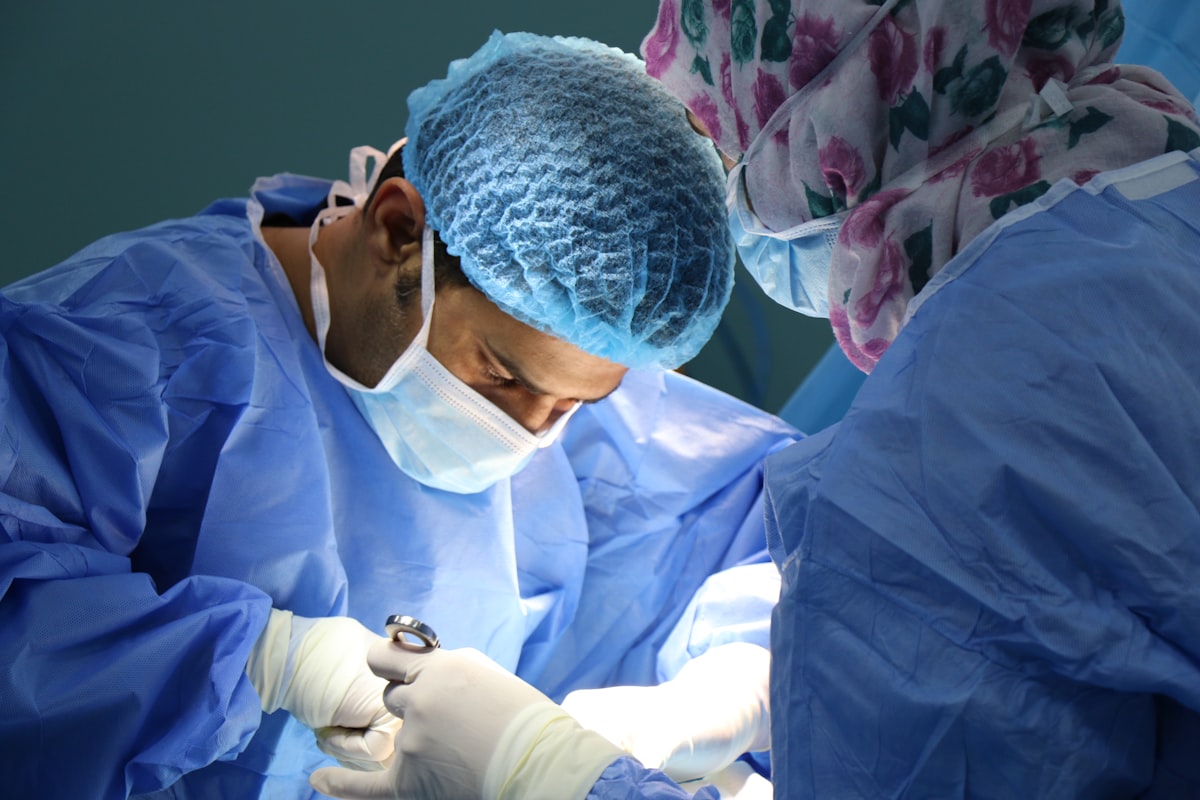
At the Lugang Campus of Xi'an Jiaotong University First Affiliated Hospital (XJTU-FAH), the orthopedic team led by Deputy Director Du Heng has now brought robotic surgical navigation into trauma orthopedics, successfully performing a robot-assisted cannulated screw fixation for a 50-year-old male patient with a femoral neck fracture.

The Clinical Challenge
Femoral neck fractures occupy a unique position in orthopedic surgery — they are common, but the consequences of suboptimal treatment are severe:
| Complication | Cause | Consequence |
|---|---|---|
| Femoral head avascular necrosis | Screw placement disrupts blood supply | Hip joint collapse; eventual total hip replacement needed |
| Non-union | Inadequate compression or unstable fixation | Chronic pain; inability to walk; reoperation required |
| Screw cut-out | Screws placed too close to cortex or in weak bone | Fixation failure; emergency revision surgery |
Traditional surgery relies on intraoperative fluoroscopy (X-ray) to guide screw placement. The surgeon repeatedly repositions the C-arm, takes images, adjusts angles — a process that is time-consuming, exposes both patient and surgeon to radiation, and still depends heavily on the surgeon's spatial judgment.
How the Robot Changes the Equation
The robotic navigation system deployed at XJTU-FAH Lugang Campus fundamentally transforms the surgical workflow:
Step 1 — 3D Planning
Using the patient's pre-operative CT data, the surgical team plans the exact trajectory, depth, and angle of each cannulated screw in a three-dimensional virtual model of the patient's femur.
Step 2 — Intraoperative Registration
The robotic system registers the patient's real anatomy to the virtual plan, creating a live correspondence between the digital model and the physical bone.
Step 3 — Robotic Guidance
The robotic arm positions a guide sleeve along the pre-planned trajectory with sub-millimeter accuracy. The surgeon drills and places screws through this guide — the robot ensures the path never deviates from the plan.
Step 4 — Real-Time Verification
The system provides visual pressure feedback monitoring insertion resistance in real time, alerting the surgeon if the screw approaches cortical bone or articular cartilage — preventing the most feared complication: screw penetration into the hip joint.
Robot-Assisted vs. Traditional Screw Fixation
| Factor | Traditional (Freehand + Fluoroscopy) | Robot-Assisted (XJTU-FAH) |
|---|---|---|
| Screw placement accuracy | Surgeon-dependent; mm-level variance | Sub-millimeter precision |
| Radiation exposure | High (repeated fluoroscopy shots) | Significantly reduced |
| Need for external guides | Bone-mounted jigs sometimes needed (additional trauma) | No additional hardware on bone |
| Screw distribution | Variable; depends on surgeon experience | Optimally distributed per 3D plan |
| Risk of cartilage penetration | Detected only on post-op imaging | Prevented in real time by pressure feedback |
| Operative time | Variable | Comparable or shorter |
The Outcome
The 50-year-old patient's surgery was completed successfully with all screws placed precisely according to the pre-operative plan. Post-operative imaging confirmed optimal screw positioning with even distribution — laying the foundation for fracture healing while preserving the blood supply critical to preventing femoral head necrosis.
From Spine to Trauma: A Growing Robotic Platform
This case represents an important expansion for XJTU-FAH's robotic orthopedic program. Since performing their first robot-assisted spinal surgery in September 2025, the Lugang campus orthopedic team has now extended the platform to trauma surgery — achieving coverage across two major orthopedic subspecialties.
The team noted this milestone represents a "technical extension and innovative breakthrough in digital smart orthopedics", establishing a foundation for applying robotic navigation to an even broader range of musculoskeletal procedures.

Orthopedic Fracture Surgery Cost: China vs Western Countries
| Procedure | China (XJTU-FAH) | United States |
|---|---|---|
| Femoral neck screw fixation (traditional) | $4,000 - $8,000 | $25,000 - $50,000 |
| Robot-assisted screw fixation | $6,000 - $12,000 | $35,000 - $70,000 |
| Total hip replacement (if fixation fails) | $8,000 - $14,000 | $32,000 - $50,000 |
| Robot-assisted spinal fusion (per level) | $10,000 - $18,000 | $50,000 - $100,000 |
China prices include surgery, implants, robotic system usage, hospital stay, and post-operative imaging.
Who Should Consider Robotic Orthopedic Surgery?
Robotic navigation is particularly valuable for patients with:
- Femoral neck fractures — Where screw accuracy directly determines whether the hip joint survives
- Osteoporotic bone — Where screw purchase is critical and margin for error is minimal
- Complex spinal conditions — Where pedicle screw misplacement risks nerve damage
- Revision surgery — Where distorted anatomy from previous operations makes freehand placement unreliable
- Young patients — Where joint preservation is the priority and every millimeter of accuracy matters for long-term outcomes
About XJTU First Affiliated Hospital
Xi'an Jiaotong University First Affiliated Hospital is one of Northwest China's premier medical centers:
- Affiliated with Xi'an Jiaotong University — a top-15 Chinese university and C9 League member
- Orthopedic department with comprehensive subspecialty coverage: spine, trauma, joint reconstruction, and sports medicine
- The Lugang Campus serves as a modern extension equipped with the latest surgical technology
- Located in Xi'an — SinomedTrip's home city, enabling seamless coordination for international patients
Facing a fracture or orthopedic condition that demands precision? Explore orthopedic treatment options in China →
Frequently Asked Questions
What are the advantages of robotic-assisted surgery for femoral neck fractures?
Robotic assistance provides submillimeter precision in screw placement, which is critical for femoral neck fractures where even small deviations can lead to screw failure or damage to the femoral head blood supply. Compared to conventional surgery, robotic-assisted procedures show lower rates of screw malposition, reduced blood loss, shorter operative times, and better long-term outcomes including lower rates of femoral head necrosis.
Who is a good candidate for robotic femoral neck fracture repair versus hip replacement?
Younger patients (typically under 60-65) with non-displaced or minimally displaced femoral neck fractures are ideal candidates for robotic-assisted fracture fixation, which preserves the natural hip joint. Older patients or those with significantly displaced fractures may be better served by hip replacement. The XJTU orthopedic team evaluates each case individually based on fracture pattern, bone quality, and patient activity level.
How soon can I walk after robotic femoral neck fracture surgery?
Most patients begin partial weight-bearing with crutches or a walker within 1 to 2 days after surgery. The transition to full weight-bearing typically occurs at 6 to 12 weeks, depending on fracture healing assessed by follow-up X-rays. Robotic precision in screw placement helps optimize fracture stability, which can facilitate earlier mobilization compared to conventional techniques.
What is the cost of robotic hip surgery in China compared to Western countries?
Robotic-assisted femoral neck fracture repair at XJTU Hospital costs approximately $8,000 to $15,000 including the robotic procedure, implants, hospital stay, and rehabilitation, compared to $30,000 to $60,000 in the United States. Hip replacement surgery costs $10,000 to $20,000 in China versus $40,000 to $80,000 in the US.
How long will I need to stay in China after robotic hip surgery?
Most patients stay 7 to 14 days in the hospital after robotic femoral neck fracture repair, followed by 1 to 2 weeks of outpatient rehabilitation. Plan for a total stay of 3 to 4 weeks in China. Some patients choose to extend their rehabilitation at the hospital for optimal recovery before the long flight home.
Is robotic surgery available for other orthopedic conditions at XJTU Hospital?
Yes. XJTU Hospital uses robotic-assisted technology for a range of orthopedic procedures including joint replacement, spinal surgery, and complex fracture repair. The robotic system provides sub-millimeter precision in implant placement, which translates to better long-term outcomes and faster recovery for patients across multiple types of orthopedic surgery.
Need advanced orthopedic care with robotic precision? Request a free surgical consultation →
This article is for informational purposes only and does not constitute medical advice. Always consult a qualified healthcare provider for diagnosis and treatment decisions.