Wrapping Tumors in Electricity: Tangdu Hospital Uses Irreversible Electroporation to Destroy Cancers Near Critical Structures
Tangdu Hospital deployed irreversible electroporation (NanoKnife) to ablate tumors located near vital blood vessels and bile ducts — destroying cancer cells with electrical pulses while preserving the surrounding structures that other ablation methods would damage.
When Heat Can't Be Used — Electricity Becomes the Weapon
Thermal ablation techniques — radiofrequency ablation (RFA) and microwave ablation (MWA) — have become standard tools for destroying tumors without surgery. But they share a critical limitation: heat damages everything in its path, including blood vessels, bile ducts, and nerves. When a tumor sits adjacent to these critical structures, thermal ablation is either too dangerous or simply impossible.
At Tangdu Hospital (Air Force Medical University, Xi'an), the interventional team has deployed a fundamentally different technology: irreversible electroporation (IRE), commercially known as NanoKnife — a technique that destroys cancer cells with precisely calibrated electrical pulses while leaving the structural scaffolding of blood vessels, bile ducts, and nerves intact.
How IRE/NanoKnife Works
Unlike heat-based ablation, IRE uses high-voltage, ultra-short electrical pulses (microseconds) delivered through needle electrodes placed around the tumor. These pulses create permanent pores in cancer cell membranes, causing the cells to die through a natural process (apoptosis) rather than thermal destruction.
The critical advantage: connective tissue structures (collagen-based) are resistant to IRE. This means:
| Structure | Thermal Ablation | IRE/NanoKnife |
|---|---|---|
| Blood vessels | Damaged — risk of hemorrhage or thrombosis | Preserved |
| Bile ducts | Destroyed — stricture and obstruction | Preserved |
| Nerves | Damaged — permanent functional loss | Preserved (function recovers) |
| Tumor cells | Killed by heat | Killed by membrane disruption |
Clinical Applications
IRE is particularly valuable for tumors that are "untouchable" by conventional ablation:
- Pancreatic tumors — Adjacent to the portal vein, superior mesenteric artery, and bile duct
- Liver tumors near major vessels — Central hepatic lesions adjacent to the hepatic veins or IVC
- Bile duct tumors (cholangiocarcinoma) — Where preserving the duct is essential
- Recurrent tumors after previous ablation — Where thermal injury has already compromised surrounding tissue
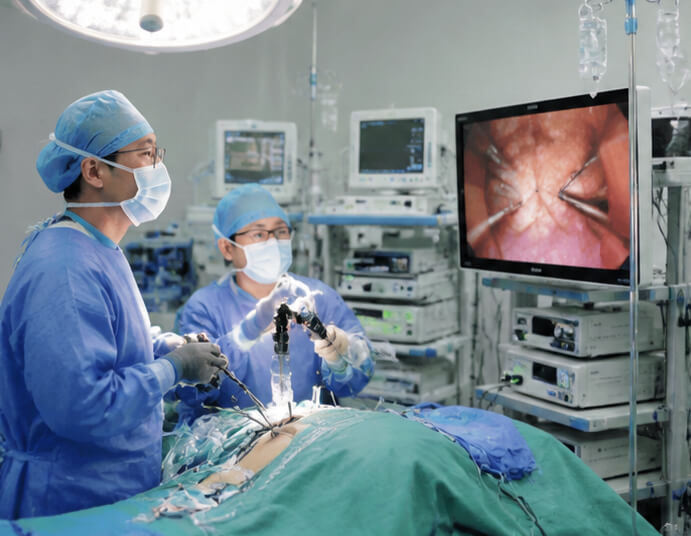
The Tangdu team demonstrated successful tumor ablation with post-procedure imaging confirming complete tumor destruction and preserved patency of adjacent critical structures. Tumor markers showed progressive decline on follow-up.
Tumor Ablation Cost: China vs Western Countries
| Procedure | China (Tangdu Hospital) | United States |
|---|---|---|
| IRE/NanoKnife ablation | $8,000 - $18,000 | $30,000 - $80,000 |
| Radiofrequency ablation (RFA) | $3,000 - $8,000 | $15,000 - $40,000 |
| Microwave ablation (MWA) | $3,000 - $8,000 | $15,000 - $40,000 |
| Pancreatic tumor resection (Whipple) | $12,000 - $22,000 | $60,000 - $120,000 |
China prices include procedure, electrode probes, imaging guidance, hospital stay, and follow-up.
About Tangdu Hospital
- Affiliated with Air Force Medical University — one of China's top military medical universities
- Interventional radiology/oncology with NanoKnife and full ablation platform capability
- Located in Xi'an — SinomedTrip's home city
Frequently Asked Questions
What types of tumors can be treated with NanoKnife (IRE) ablation?
NanoKnife is particularly effective for tumors near critical structures such as major blood vessels, bile ducts, and nerves where heat-based ablation or surgery would cause unacceptable damage. Common applications include pancreatic cancer, liver tumors near major vessels, kidney tumors, and certain prostate cancers. The technology destroys cancer cells using electrical pulses while preserving surrounding connective tissue structures.
Is NanoKnife treatment painful and what is the recovery time?
NanoKnife is performed under general anesthesia, so patients feel no pain during the procedure. Post-procedure discomfort is typically mild and managed with standard pain medication. Most patients are discharged within 2 to 4 days and return to normal activities within 1 to 2 weeks, which is significantly faster than recovery from conventional surgery for the same tumors.
How do I know if NanoKnife is an option for my cancer?
The best way to determine eligibility is to submit your imaging studies (CT and/or MRI) and pathology reports for review by Tangdu Hospital's interventional oncology team. Key factors include tumor size (generally under 5cm), location relative to critical structures, and overall health status. SinomedTrip offers a free initial assessment to help you determine whether NanoKnife is appropriate for your case.
How much does NanoKnife treatment cost in China compared to other countries?
NanoKnife IRE ablation at Tangdu Hospital costs approximately $8,000 to $15,000 depending on the tumor size and location, compared to $30,000 to $60,000 in the United States. This includes the procedure, anesthesia, hospital stay, and post-procedure imaging to assess treatment effectiveness.
Have a tumor near critical structures that's been called "inoperable"? Request a free consultation →
This article is for informational purposes only and does not constitute medical advice. Always consult a qualified healthcare provider for diagnosis and treatment decisions.