Light That Kills Cancer: XJTU Hospital Performs First Cholangioscopy-Guided Photodynamic Therapy for Bile Duct Tumors
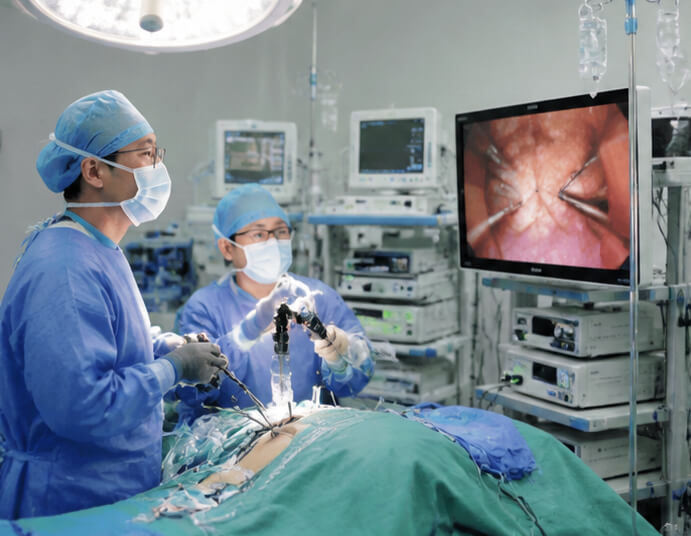
XJTU First Affiliated Hospital's Lugang campus completed its first photodynamic therapy delivered through a cholangioscope — using targeted light energy to destroy bile duct tumors from the inside without open surgery.
Shining a Light Inside the Bile Duct to Destroy Cancer
Bile duct cancer (cholangiocarcinoma) is one of the most difficult cancers to treat. The tumors grow inside narrow tubes deep in the abdomen, often wrapping around critical blood vessels and making complete surgical removal impossible in many patients. For those with unresectable disease, treatment options have been limited to chemotherapy and stenting — neither of which directly attacks the tumor.
Now, the gastroenterology team at XJTU First Affiliated Hospital's Lugang Campus has introduced a precision weapon: cholangioscopy-guided photodynamic therapy (PDT) — threading a tiny camera directly into the bile duct, then activating a light-sensitive drug with laser energy to destroy cancer cells from the inside.
How Photodynamic Therapy Works
PDT is a two-step process:
- Photosensitizer administration — A light-sensitive drug is injected intravenously. Over 24-48 hours, it accumulates preferentially in cancer cells
- Light activation — A specific wavelength of laser light is delivered directly to the tumor through the cholangioscope. The light activates the drug, generating toxic oxygen species that destroy the cancer cells while sparing normal tissue
The key innovation here is the delivery method: using a cholangioscope (a ultra-thin endoscope designed to navigate the bile ducts) to deliver the laser light directly to the tumor surface — ensuring maximum energy reaches the cancer with minimal collateral damage.
PDT vs. Conventional Bile Duct Cancer Treatment
| Factor | Cholangioscopy PDT | Stenting Alone | Chemotherapy |
|---|---|---|---|
| Tumor destruction | Direct — kills cancer cells on contact | None — only opens blockage | Systemic — affects whole body |
| Bile duct patency | Improved — tumor shrinks | Temporary — tumor regrows around stent | Variable |
| Side effects | Photosensitivity (temporary) | Minimal | Significant (nausea, fatigue, immune suppression) |
| Repeatability | Can be repeated multiple times | Stent replacement needed | Limited cycles |
| Survival benefit | Demonstrated improvement | Palliative only | Modest |
Bile Duct Cancer Treatment Cost: China vs Western Countries
| Procedure | China (XJTU-FAH) | United States |
|---|---|---|
| Cholangioscopy-guided PDT (per session) | $5,000 - $10,000 | $25,000 - $50,000 |
| ERCP with stenting | $2,000 - $5,000 | $10,000 - $25,000 |
| Bile duct surgical resection (Whipple) | $12,000 - $22,000 | $60,000 - $120,000 |
China prices include procedure, photosensitizer drug, hospital stay, and follow-up.
About XJTU First Affiliated Hospital
- Affiliated with Xi'an Jiaotong University — C9 League, top-15 Chinese university
- Lugang Campus equipped with the latest endoscopic and interventional technology
- Located in Xi'an — SinomedTrip's home city
Frequently Asked Questions
What is photodynamic therapy and how does it work against bile duct cancer?
Photodynamic therapy (PDT) involves injecting a light-sensitive drug that accumulates preferentially in cancer cells. A special light delivered through a cholangioscope (a tiny camera inserted into the bile duct) then activates the drug, producing reactive oxygen species that destroy the cancer cells while minimizing damage to surrounding healthy tissue. It is particularly useful for tumors that are difficult to remove surgically.
Is cholangioscopy-guided PDT a cure for bile duct cancer?
PDT is primarily used to control tumor growth, relieve bile duct obstruction, and extend survival rather than as a standalone cure. It is most effective when combined with other treatments such as chemotherapy or stenting. For patients with inoperable bile duct cancer, PDT has been shown to significantly improve quality of life and survival compared to stenting alone.
How long do I need to stay in China for bile duct PDT treatment?
A single PDT treatment session typically requires 5 to 7 days in the hospital, including pre-procedure preparation, the photosensitizer injection (given 24-48 hours before light activation), the procedure itself, and post-procedure monitoring. Some patients require multiple sessions spaced several weeks apart. The XJTU team will outline a complete treatment plan after reviewing your case.
What are the side effects and risks of photodynamic therapy for bile duct cancer?
Common side effects include temporary skin photosensitivity lasting 4 to 6 weeks, during which patients must avoid direct sunlight. Some patients experience mild abdominal discomfort or transient fever after the procedure. Serious complications are rare when PDT is performed at experienced centers. The treatment can be repeated if needed, and it is compatible with concurrent chemotherapy.
Facing bile duct cancer with limited treatment options? Request a free consultation →
This article is for informational purposes only and does not constitute medical advice. Always consult a qualified healthcare provider for diagnosis and treatment decisions.