No Scars, No Trace: Tongji Hospital Removes Ectopic Parathyroid Tumor Through the Patient's Mouth
A 66-year-old man's parathyroid gland had migrated deep into his chest. Tongji Hospital's thoracic surgery team removed it through an incision inside his lip — leaving zero visible scars on his neck or body.
The Gland Was in the Wrong Place — and the Surgery Left No Visible Mark
Parathyroid glands are supposed to sit behind the thyroid in the neck — four tiny glands, each the size of a grain of rice, that regulate calcium levels throughout the body. When one of these glands develops a tumor (adenoma), it overproduces parathyroid hormone, flooding the bloodstream with calcium and causing a cascade of dangerous symptoms.
But what happens when the diseased gland isn't where it's supposed to be?
For 66-year-old Mr. Wang, blood tests revealed parathyroid hormone levels over 300 times the normal upper limit — an astronomical number that indicated a massive, aggressively secreting tumor. Imaging studies located the culprit not in his neck, but deep in his anterior superior mediastinum — the space behind the breastbone, between the lungs.
This is called an ectopic parathyroid adenoma — a tumor that has migrated far from its normal anatomical position. Reaching it traditionally requires either a neck incision or a chest surgery, both leaving visible scars.
Tongji Hospital (Huazhong University of Science and Technology) found a way to remove it without cutting the neck or chest at all.
The Problem with Ectopic Parathyroid Tumors
Ectopic parathyroid glands occur in approximately 5-10% of patients with hyperparathyroidism. The gland can end up anywhere from the jaw to deep in the chest, having migrated during embryological development. When these glands become diseased, the surgical challenge multiplies:
| Location | Standard Surgical Access | Cosmetic Impact |
|---|---|---|
| Normal position (behind thyroid) | Small neck incision | Visible neck scar |
| Thoracic inlet / upper mediastinum | Extended neck incision OR sternotomy | Large neck or chest scar |
| Deep mediastinum | Thoracoscopy (VATS) or sternotomy | Chest wall scars |
For Mr. Wang, whose tumor sat at the thoracic inlet and anterior mediastinum, a conventional approach would have required a cervical incision with possible sternal extension — leaving a prominent scar across the neck and potentially the chest.
The Tongji Innovation: Transoral Vestibular Approach
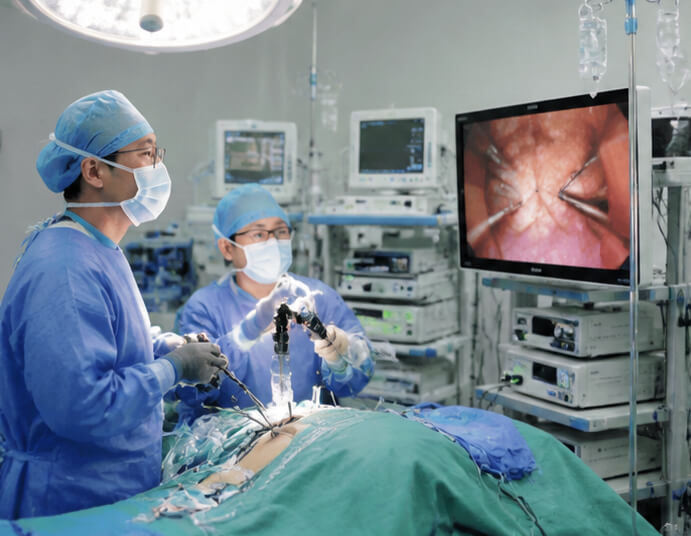
Dr. Zhang Ni, Chief Physician of Thoracic Surgery at Tongji Hospital, devised an innovative surgical route: accessing the tumor through the oral vestibule — the space between the inner lip and the gums.
How the surgery worked:
- Three micro-incisions inside the lower lip — Tiny ports placed where the lip meets the gum line, completely hidden inside the mouth
- Dissection along natural cervical planes — The surgical instruments traveled downward through the neck's natural tissue planes, following the path between anatomical structures without cutting through muscle or creating external wounds
- Reach into the mediastinum — Following these natural planes, the surgeon accessed the thoracic inlet and anterior mediastinum where the ectopic gland was located
- Complete tumor excision — The diseased parathyroid was identified, isolated, and removed entirely
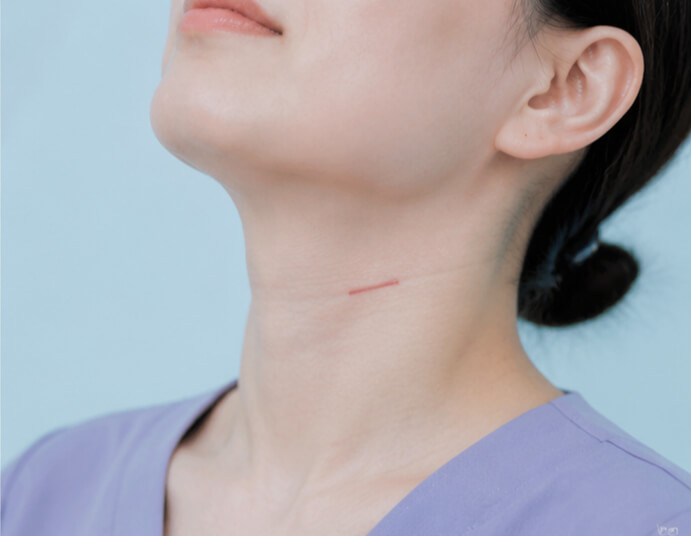
Result: Every incision was inside the mouth. Zero scars on the neck, chest, or anywhere externally visible.
The Outcome
Post-operatively, Mr. Wang's recovery was remarkable:
- Parathyroid hormone levels — Returned to normal
- Blood calcium — Normalized
- Voice — No hoarseness (recurrent laryngeal nerve preserved)
- Swallowing — No difficulty
- Visible scarring — None
Transoral vs. Conventional Parathyroid Surgery
| Factor | Transoral (Tongji Hospital) | Conventional Cervical/Thoracic |
|---|---|---|
| External scars | Zero — all incisions inside mouth | Neck scar (4-8 cm) ± chest scar |
| Nerve injury risk | Comparable (requires skilled surgeon) | Comparable |
| Access to mediastinum | Yes — via cervical natural planes | Yes — via sternotomy or VATS |
| Recovery | Rapid; oral incisions heal quickly | Standard; external wound care needed |
| Cosmetic outcome | Perfect — no visible trace | Permanent scar |
Why This Matters for International Patients
Hyperparathyroidism is a common endocrine condition worldwide. For patients who need surgery — especially those with ectopic glands requiring more extensive access — the cosmetic implications of a large neck or chest scar can be a significant concern, particularly for women and younger patients.
Tongji Hospital's transoral approach eliminates this concern entirely. The technique is particularly relevant for:
- Patients with ectopic parathyroid adenomas — Glands located in the mediastinum or unusual positions
- Patients prioritizing cosmetic outcomes — No visible scarring whatsoever
- Recurrent hyperparathyroidism — When the diseased gland wasn't found during initial neck exploration
- Thyroid surgery candidates — The transoral approach can also be applied to certain thyroid operations
Parathyroid Surgery Cost: China vs Western Countries
| Procedure | China (Tongji Hospital) | United States |
|---|---|---|
| Standard parathyroidectomy (neck approach) | $3,000 - $6,000 | $15,000 - $30,000 |
| Transoral parathyroidectomy (scarless) | $5,000 - $10,000 | $20,000 - $40,000 |
| Mediastinal parathyroid excision (VATS/sternotomy) | $8,000 - $15,000 | $30,000 - $60,000 |
| Pre-op localization (sestamibi + CT) | $400 - $800 | $2,000 - $5,000 |
China prices include surgery, hospital stay, intraoperative PTH monitoring, and follow-up labs.
A Warning from Dr. Zhang Ni
Dr. Zhang Ni emphasized that patients with persistently elevated blood calcium or parathyroid hormone levels should be evaluated for ectopic parathyroid disease — especially if prior neck exploration was negative. Advanced imaging (sestamibi scan, 4D-CT, or PET/CT) can locate ectopic glands that standard ultrasound misses.
About Tongji Hospital Thoracic Surgery
Tongji Hospital's thoracic surgery department is among the strongest in Central China:
- Affiliated with Huazhong University of Science and Technology — a top-10 Chinese university
- Dr. Zhang Ni specializes in minimally invasive and natural-orifice thoracic surgery
- Pioneer in transoral and subxiphoid approaches to mediastinal surgery
- Located in Wuhan, with direct international flights from major global cities
Frequently Asked Questions
What is an ectopic parathyroid gland and why is it hard to find?
Parathyroid glands normally sit behind the thyroid in the neck, but in about 5-10% of people, one or more glands develop in abnormal locations such as the chest (mediastinum), behind the esophagus, or within the thyroid. These ectopic glands are difficult to locate with standard imaging and can cause hyperparathyroidism that persists after conventional neck surgery.
Will I have a visible scar after transoral parathyroid surgery?
No. The transoral approach accesses the surgical site through the inside of the mouth, leaving no external scars whatsoever. This is a significant advantage over traditional neck surgery, which leaves a visible scar across the lower neck. The cosmetic result is one of the primary reasons patients choose this approach.
How long is the hospital stay for transoral ectopic parathyroid surgery?
Most patients stay 2 to 4 days after transoral parathyroid surgery. The procedure itself takes 1 to 3 hours depending on the location of the ectopic gland. Recovery is typically faster than open surgery because there are no external incisions to heal. Patients can usually eat soft foods the same day and return to normal activities within 1 to 2 weeks.
What are the risks of transoral parathyroid surgery compared to traditional neck surgery?
Transoral parathyroid surgery carries similar overall complication rates to traditional surgery when performed by experienced surgeons. The main advantage is the absence of a visible neck scar. Risks specific to the transoral approach include temporary lip numbness and a slightly longer operating time. At Tongji Hospital, the surgical team's high case volume translates to very low complication rates.
How do I know if I am a candidate for the transoral approach to parathyroid surgery?
Most patients with primary hyperparathyroidism or ectopic parathyroid glands can be considered for the transoral approach. Candidacy depends on the location and size of the abnormal gland as determined by imaging, your overall health, and any history of prior neck surgery. A remote consultation with the Tongji Hospital team can determine your eligibility before you travel.
What is the cost of transoral parathyroid surgery in China versus other countries?
Transoral parathyroid surgery at Tongji Hospital costs approximately $5,000 to $10,000 including surgery, hospital stay, and pre-operative imaging, compared to $15,000 to $30,000 in the United States. The scarless cosmetic result and lower cost make China an attractive option for patients seeking this advanced technique.
Have an endocrine condition requiring surgery? Request a free surgical consultation →
This article is for informational purposes only and does not constitute medical advice. Always consult a qualified healthcare provider for diagnosis and treatment decisions.