Pinpoint Precision: XJTU Hospital Uses CT-Guided Interventional Radiology to Destroy Brain Tumors Without Open Surgery
XJTU First Affiliated Hospital's interventional radiology team used CT-guided stereotactic techniques to precisely target and treat brain tumors — offering a minimally invasive alternative for patients who cannot undergo open craniotomy.
Destroying Brain Tumors Through a Needle — No Craniotomy Required
For patients with brain tumors located in deep or eloquent areas of the brain, traditional open surgery carries significant risks: damage to critical brain structures controlling speech, movement, or consciousness. Some patients are simply too old or too medically fragile to survive a craniotomy.
The interventional radiology team at Xi'an Jiaotong University First Affiliated Hospital (XJTU-FAH) has demonstrated a precision alternative: CT-guided stereotactic biopsy and ablation — accessing the tumor through a needle-sized entry point in the skull, guided by real-time imaging to sub-millimeter accuracy.
The Clinical Challenge
Brain tumors in certain locations present a cruel dilemma:
| Scenario | Open Surgery Risk | Consequence of No Treatment |
|---|---|---|
| Deep-seated tumors (thalamus, brainstem) | Extremely high — must traverse healthy brain tissue | Progressive neurological decline, death |
| Eloquent cortex tumors (motor strip, language areas) | Paralysis or speech loss | Tumor growth causes same deficits |
| Multiple lesions | Multiple craniotomies impractical | Disease progression |
| Elderly or frail patients | Cannot tolerate general anesthesia for craniotomy | Palliative care only |
The XJTU Approach
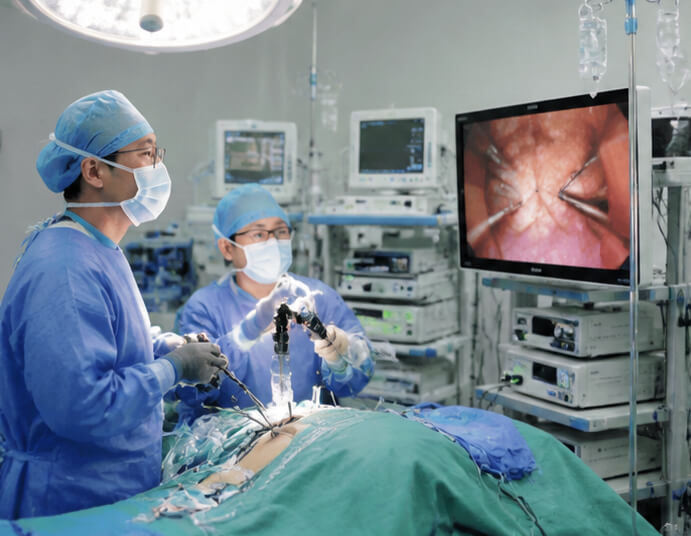
The interventional team uses advanced CT navigation to plan a precise trajectory from the skull surface to the tumor center, avoiding critical blood vessels and brain structures. Through a small burr hole (typically 3-5mm), specialized instruments are guided to the exact tumor location for biopsy, ablation, or local drug delivery.
Key advantages over open craniotomy:
- No large scalp incision — Only a small puncture site
- No brain retraction — The needle follows a calculated path without displacing brain tissue
- Real-time imaging confirmation — CT verification ensures the target is reached precisely
- Shorter procedure time — Typically 1-2 hours vs. 4-8 hours for craniotomy
- Faster recovery — Most patients recover within days

Brain Tumor Treatment Cost: China vs Western Countries
| Procedure | China (XJTU-FAH) | United States |
|---|---|---|
| CT-guided stereotactic biopsy | $3,000 - $6,000 | $15,000 - $35,000 |
| Stereotactic ablation | $8,000 - $15,000 | $30,000 - $70,000 |
| Open craniotomy tumor resection | $12,000 - $25,000 | $50,000 - $120,000 |
| Gamma Knife radiosurgery | $5,000 - $10,000 | $25,000 - $50,000 |
China prices include procedure, imaging, hospital stay, and post-operative care.
About XJTU First Affiliated Hospital
- Affiliated with Xi'an Jiaotong University — a C9 League member and top-15 Chinese university
- Interventional radiology department with advanced CT and MRI-guided procedural capability
- Located in Xi'an — SinomedTrip's home city
Frequently Asked Questions
What types of brain tumors can be treated with CT-guided interventional radiology?
CT-guided interventional techniques can treat both primary brain tumors (such as gliomas) and metastatic brain tumors. The approach is particularly valuable for tumors in deep or eloquent brain areas where open surgery carries high risk of neurological damage. Eligibility depends on tumor size, location, and type, which the XJTU interventional team evaluates through detailed imaging review.
How does CT-guided brain tumor treatment compare to traditional brain surgery?
CT-guided interventional treatment uses a small needle or probe inserted through a tiny skull opening, guided by real-time imaging to the exact tumor location. Compared to traditional craniotomy, it involves less tissue disruption, shorter hospital stays (typically 3 to 5 days), lower infection risk, and faster recovery. However, it is not suitable for all tumor types and sizes, so a thorough evaluation is essential.
Is this minimally invasive brain tumor treatment available to international patients?
Yes. XJTU Hospital's interventional radiology department accepts international patients for brain tumor treatment. The initial evaluation can be done remotely by sending your MRI and CT scans for review. SinomedTrip coordinates the entire process including imaging transfer, consultation scheduling, travel arrangements, and in-hospital interpretation.
How long is the hospital stay after CT-guided brain tumor treatment?
Most patients stay 3 to 7 days in the hospital after CT-guided interventional brain tumor treatment, significantly shorter than the 1 to 3 weeks typical after traditional open brain surgery. Many patients feel well enough to walk and eat independently within 24 to 48 hours after the procedure.
Need a minimally invasive approach to a brain tumor? Request a free consultation →
This article is for informational purposes only and does not constitute medical advice. Always consult a qualified healthcare provider for diagnosis and treatment decisions.