A Bomb in Her Brain: The 12-Hour Surgery to Defuse a Giant Aneurysm That 90% of Hospitals Would Refuse
A young woman collapsed with the worst headache of her life. Scans revealed a massive cerebral aneurysm at the highest surgical grade. A Shanghai hospital's neurovascular team spent 12 hours dismantling it — and she walked out of the hospital.
11:42 PM — The Headache That Changed Everything
She was 34 years old and had never had a serious health problem in her life.
Then, without warning, a headache struck — not the dull ache of tension or the throbbing pulse of a migraine, but something entirely different. A thunderclap. An explosion of pain so sudden and so severe that she screamed, grabbed her head with both hands, and collapsed onto the bathroom floor.
Her partner called an ambulance. By the time paramedics arrived, she was vomiting, confused, and losing consciousness. The emergency physician had seen this pattern before. He said four words into his radio that activated an entire hospital: "Possible subarachnoid hemorrhage."
She was rushed to one of Shanghai's top neurovascular centers. The CT scan confirmed the worst: blood was spreading across the surface of her brain. An emergency cerebral angiogram revealed the source — and it was far worse than anyone expected.

The Discovery: A Ticking Bomb at Maximum Danger
Inside her brain, hiding at the junction of two major arteries, sat a giant cerebral aneurysm — a ballooned-out section of blood vessel wall, stretched so thin that it had already begun to leak. The angiogram images told the neurosurgical team everything they needed to know — and everything they feared.
What the Scans Showed
The aneurysm wasn't just large. It was giant — measuring over 25 millimeters in diameter, involving a critical branch point of the cerebral vasculature. In the international grading system used to classify the difficulty of aneurysm surgery, this case scored at the highest possible grade.
To understand what this means, consider the grading factors:
| Factor | This Patient | Risk Implication |
|---|---|---|
| Aneurysm size | Giant (>25mm) | Higher rupture pressure; more complex to clip or coil |
| Location | Critical arterial junction | Clipping risks blocking blood flow to large brain territories |
| Neck morphology | Wide neck, irregular shape | Standard coiling won't hold; requires advanced techniques |
| Already ruptured | Yes — active subarachnoid hemorrhage | Brain already swelling; second rupture could be fatal within minutes |
| Patient condition | Deteriorating consciousness | Every hour of delay worsens prognosis |
The attending neurosurgeon later described the situation in stark terms: "This was the kind of aneurysm that, if you presented it at an international conference, half the audience would say 'untreatable' and the other half would argue about which impossible approach to attempt."
The Decision: Surgery That Most Hospitals Would Decline
Giant aneurysms at the highest grade represent a tiny fraction of all brain aneurysm cases — perhaps 2-5%. They are the cases that get transferred from hospital to hospital, as each institution's neurosurgeons evaluate the risk and decide it exceeds their comfort zone.
This patient had already been turned away by one hospital before arriving here.
The neurovascular team — spanning neurosurgery, interventional neuroradiology, neuroanesthesia, and neuro-ICU — held an emergency conference. The options were:
Option A: Conservative management. Control blood pressure, monitor in ICU, hope it doesn't re-rupture. Success rate for preventing re-rupture: approximately 30-40% over the next two weeks. If it re-ruptures, mortality exceeds 70%.
Option B: Endovascular coiling. Thread a catheter into the aneurysm and pack it with platinum coils. Problem: the wide neck and giant size made standard coiling technically unfeasible. The coils would simply fall out.
Option C: Open microsurgical clipping with bypass. Open the skull, directly visualize the aneurysm, clip its neck, and if necessary, construct a bypass to maintain blood flow to the territories at risk. This is the most complex, most dangerous, and most definitive option. It would take 8-12 hours. The margin for error would be measured in fractions of a millimeter.
They chose Option C.
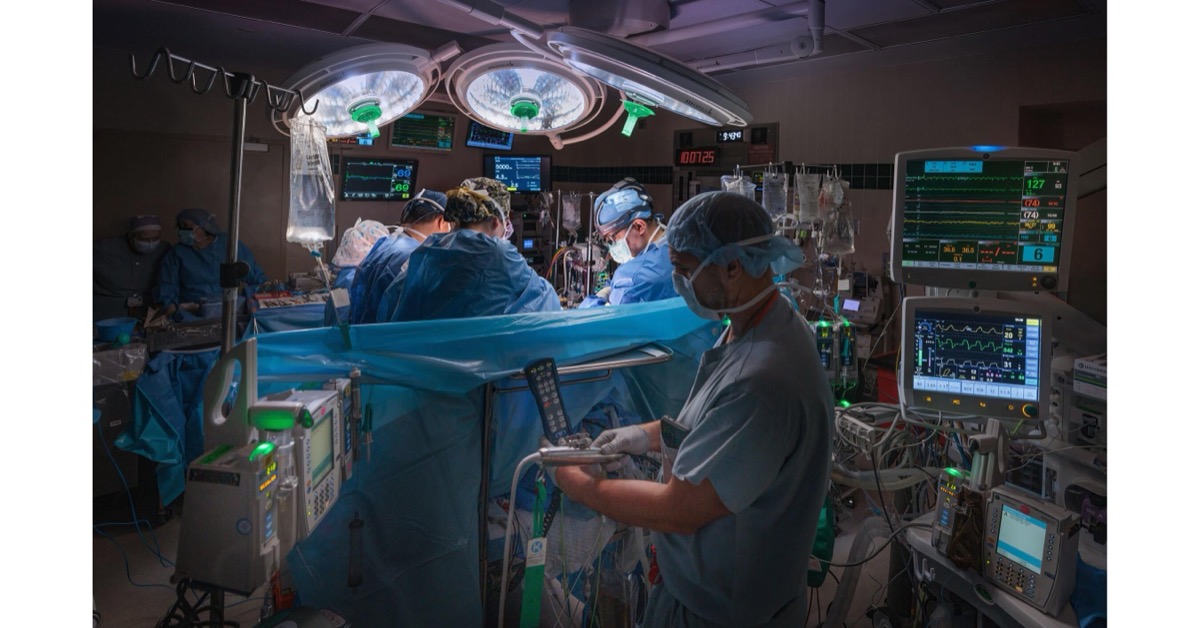
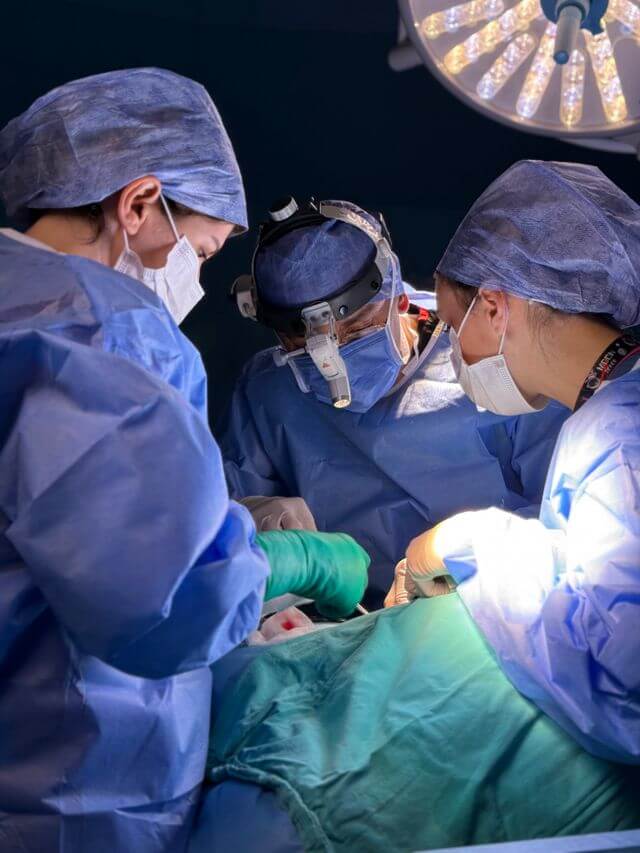
Inside the Operating Room: 12 Hours on the Edge
What followed was one of the longest and most technically demanding neurosurgical procedures imaginable. Here is what a 12-hour aneurysm surgery actually involves — the details that medical news articles typically skip:
Hours 1-2: The Approach
A carefully planned craniotomy — removing a section of skull to access the brain. The bone flap must be positioned precisely to provide a corridor to the aneurysm while minimizing brain retraction. Millimeters matter. The wrong angle means you can't see the aneurysm neck. The wrong amount of retraction damages healthy brain.
Hours 3-5: The Dissection
Under 20x magnification through the surgical microscope, the surgeon painstakingly separates the aneurysm from the surrounding brain tissue and blood vessels. Adhesions from the hemorrhage make every structure stick together. The aneurysm wall is so thin in places that it's translucent — you can see the blood flowing inside it. One slip of a microsurgical instrument, one moment of excessive traction, and the aneurysm re-ruptures on the operating table.
Hours 5-8: The Bypass
Before the aneurysm can be clipped, the team must construct a detour — a bypass graft — to ensure blood continues flowing to the brain territories that the affected artery supplies. This involves harvesting a small artery from elsewhere in the body and microsurgically suturing it to a brain surface artery, with sutures finer than a human hair, connecting vessels barely 1mm in diameter.
Hours 8-10: The Clip
With the bypass in place and confirmed flowing, the moment arrives: placing the titanium clip across the aneurysm neck. The clip must completely occlude the aneurysm without narrowing or kinking any adjacent normal arteries. The surgeon adjusts, checks with intraoperative angiography, repositions, checks again. One attempt. Two attempts. Three. Finally: complete obliteration. The aneurysm is dead. The bypass is flowing. The brain is perfused.
Hours 10-12: Closure and Confirmation
Hemostasis. Bone flap replacement. Skin closure. Final angiogram confirming the aneurysm is completely eliminated and all vessels are patent.
The Aftermath: From the Brink to Walking Out
Post-operatively, the patient spent 10 days in the neuro-ICU. The first 72 hours were the most critical — the period of highest risk for vasospasm, a condition where brain arteries clamp down in response to the blood from the original hemorrhage, potentially causing secondary strokes.
She made it through.
At two weeks, she was speaking clearly. At three weeks, she was walking with assistance. At six weeks, she was discharged — neurologically intact, with the aneurysm permanently eliminated.
The Numbers Behind the Miracle
| Metric | This Case | Published Averages for Giant Aneurysms |
|---|---|---|
| Mortality without treatment | — | 50-80% within 1 year |
| Surgical mortality (highest grade) | Survived | 10-25% at experienced centers |
| Good neurological outcome | Yes — independent | 30-60% at experienced centers |
| Complete aneurysm obliteration | Yes | 80-95% with clipping |
What International Patients Should Understand
Giant brain aneurysms are a condition where hospital choice is literally a life-or-death decision. The difference between a center that performs 5 aneurysm surgeries per year and one that performs 200 is not incremental — it's categorical. Volume, team experience, and 24/7 neuro-ICU capability are the three factors that most predict survival.
China's top neurovascular centers in Shanghai, Beijing, and other major cities perform among the highest volumes of complex aneurysm surgery in the world — a direct consequence of serving a population of 1.4 billion people. This volume translates to expertise that is difficult to match elsewhere.
Neurovascular Surgery Cost: China vs Western Countries
| Procedure | China | United States |
|---|---|---|
| Giant aneurysm clipping + bypass | $20,000 - $40,000 | $100,000 - $300,000 |
| Endovascular coiling (standard aneurysm) | $12,000 - $22,000 | $50,000 - $120,000 |
| Flow diverter placement | $15,000 - $25,000 | $80,000 - $150,000 |
| Neuro-ICU (per day) | $500 - $1,000 | $5,000 - $15,000 |
China prices include surgery, ICU, ward stay, imaging, and rehabilitation.
Frequently Asked Questions
How do I know if my brain aneurysm is too complex for my local hospital?
If your neurosurgeon describes the aneurysm as giant (over 25mm), located at a critical arterial junction, or requiring bypass surgery, you should seek a second opinion from a high-volume neurovascular center. Hospitals that perform fewer than 50 aneurysm surgeries per year may not have the specialized team needed for the most complex cases.
What is the recovery timeline after complex brain aneurysm surgery?
Recovery varies by case, but most patients spend 7 to 14 days in the neuro-ICU followed by 2 to 4 weeks on the general neurosurgery ward. Full neurological recovery can take 3 to 6 months. Many patients benefit from a structured rehabilitation program before returning home, which can be arranged at the same hospital in China.
Can I get a remote second opinion from a Chinese neurosurgeon before traveling?
Yes. SinomedTrip facilitates telemedicine consultations where you can share your CT, MRI, and angiography images with neurovascular specialists at top Chinese hospitals. The surgeon will review your imaging, assess surgical feasibility, and provide a treatment plan before you commit to traveling. This initial consultation is typically free.
How much does brain aneurysm surgery cost in China compared to the United States?
Giant aneurysm clipping with bypass costs $20,000 to $40,000 in China compared to $100,000 to $300,000 in the United States. Endovascular coiling for standard aneurysms costs $12,000 to $22,000 in China versus $50,000 to $120,000 in the US. These prices include surgery, ICU stay, ward stay, imaging, and rehabilitation.
What should I bring with me when traveling to China for brain aneurysm treatment?
Bring all cerebral imaging on CD or USB including CT, MRI, and angiography studies, your complete medical records, a list of current medications, insurance documentation, and a companion who can help with decision-making and daily support during recovery. SinomedTrip can arrange for all records to be reviewed by the neurosurgical team before your arrival so a preliminary treatment plan is ready.
How long will I need to stay in China for brain aneurysm surgery and recovery?
For complex aneurysm surgery, plan for 4 to 8 weeks in China. This includes pre-operative evaluation and imaging over 3 to 5 days, the surgery itself, 7 to 14 days in the neuro-ICU, 2 to 4 weeks on the general ward, and initial rehabilitation. Some patients choose to extend their stay for additional structured rehabilitation before flying home.
Diagnosed with a brain aneurysm and told it's "too complex"? A second opinion could change everything. Request a free neurovascular consultation →
This article is for informational purposes only and does not constitute medical advice. Always consult a qualified healthcare provider for diagnosis and treatment decisions.