China's First PGT-Plus Baby Born at Tangdu Hospital, Xi'an
Tangdu Hospital achieved a national first — using integrated PGT-Plus technology to screen embryos for chromosomal and single-gene defects simultaneously, delivering a healthy baby.
A National Breakthrough in Reproductive Medicine
"We can now test for everything in one step."
That's how Professor Wang Xiaohong, head of the Reproductive Medicine Center at Tangdu Hospital (Air Force Medical University, Xi'an), described the significance of a procedure her team recently completed — one that national, military, and regional media all covered.
For the first time in China, a baby has been born using PGT-Plus, an integrated preimplantation genetic testing technology that simultaneously screens embryos for chromosomal abnormalities, structural variants, and single-gene diseases — all in a single test cycle.
The Couple's Genetic Dilemma
The parents faced a combination of genetic risks that made natural conception extremely dangerous:
- Chromosomal structural abnormality in one parent — dramatically increasing the chance of miscarriage or a child with unbalanced chromosomes
- TBC1D24 gene mutations in both parents — a recessive condition linked to severe epilepsy, hearing loss, and neurological disability
Any pregnancy without genetic screening carried a high probability of serious outcomes. But traditional genetic testing approaches would require multiple separate test rounds — one for chromosomal balance, another for the specific gene mutation — adding months of time, thousands in cost, and significant emotional strain.
What Makes PGT-Plus Different
Professor Wang's team developed a unified protocol using high-throughput whole-genome sequencing that checks everything at once:
| Traditional Approach | PGT-Plus |
|---|---|
| PGT-A for chromosome count — separate test | All three analyses from one embryo biopsy |
| PGT-SR for structural rearrangements — separate test | Single sequencing run covers everything |
| PGT-M for the specific gene mutation — separate test | Faster results, higher accuracy, lower cost |
| 3 rounds of analysis, weeks of waiting | One comprehensive report |
The Result
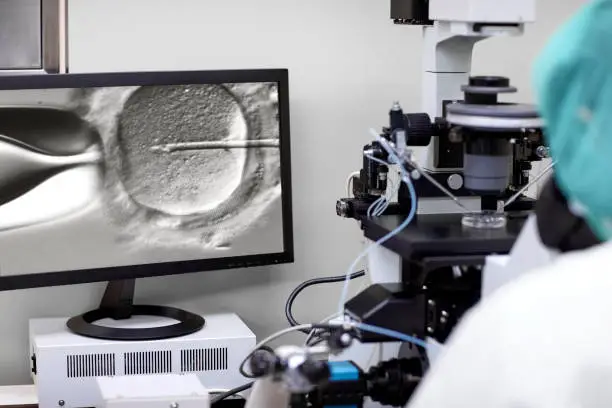
The team performed IVF, biopsied the embryos at blastocyst stage, ran the integrated PGT-Plus analysis, and identified a healthy embryo — one that was chromosomally normal, structurally balanced, and free from two copies of the TBC1D24 mutation.
That embryo was transferred. Nine months later, a healthy baby was born.
The case was verified as China's first successful clinical application of integrated PGT-Plus technology, attracting coverage from CCTV and other major Chinese media outlets.
Why International Patients Choose China for IVF
China has quietly become one of the world's most advanced destinations for assisted reproduction, yet most international patients don't know this. Here's what the numbers show:
| Factor | China | United States | Thailand |
|---|---|---|---|
| IVF success rate (under 35) | 55-65% | 50-60% | 45-55% |
| Wait time to start cycle | 2-4 weeks | 2-6 months | 2-4 weeks |
| Genetic screening technology | PGT-Plus available | PGT-A/M/SR (separate) | PGT-A mainly |
| Average IVF cycle cost | $4,000 - $7,000 | $15,000 - $25,000 | $8,000 - $12,000 |
| PGT genetic screening | $1,500 - $5,000 | $5,000 - $15,000 | $3,000 - $8,000 |
Who Should Consider PGT-Plus?
This technology is especially relevant for couples who:
- Carry balanced translocations or inversions and have experienced recurrent miscarriage
- Are known carriers of single-gene disorders — cystic fibrosis, thalassemia, sickle cell disease, spinal muscular atrophy, or conditions like TBC1D24
- Have both chromosomal and single-gene risks — the exact scenario PGT-Plus was built for
- Have failed previous IVF cycles due to genetically abnormal embryos
- Want to minimize the number of test rounds and reduce overall treatment time
About Tangdu Hospital
Tangdu Hospital is one of two flagship hospitals of the Air Force Medical University in Xi'an:
- Reproductive Medicine Center led by Professor Wang Xiaohong, a nationally recognized specialist in PGT and complex IVF cases
- Among the earliest hospitals in China to offer third-generation IVF with comprehensive genetic testing
- Strong research partnerships with China's leading genomics institutions
- Located in Xi'an — SinomedTrip's home city, allowing seamless coordination from consultation through delivery
Frequently Asked Questions
What is PGT-Plus and how is it different from standard PGT genetic screening?
PGT-Plus is an advanced form of preimplantation genetic testing that screens embryos for a broader range of genetic conditions than standard PGT. While conventional PGT screens for specific known mutations (PGT-M) or chromosomal abnormalities (PGT-A), PGT-Plus combines multiple screening modalities to provide a more comprehensive genetic assessment of each embryo before transfer, increasing the chances of a healthy pregnancy.
Who should consider PGT-Plus during IVF treatment?
PGT-Plus is particularly valuable for couples with known genetic disorders in their family history, those who have experienced recurrent miscarriages or failed IVF cycles, and older parents where chromosomal abnormalities are more common. It is also recommended for couples who are both carriers of the same recessive genetic condition. The Tangdu fertility team can advise whether PGT-Plus is appropriate for your situation.
How much does IVF with PGT-Plus cost at Tangdu Hospital compared to other countries?
A complete IVF cycle with PGT-Plus at Tangdu Hospital typically costs $8,000 to $15,000, compared to $25,000 to $40,000 in the United States or $15,000 to $25,000 in Europe. This includes ovarian stimulation, egg retrieval, fertilization, genetic testing of embryos, and embryo transfer. The lower cost makes it feasible for couples to attempt multiple cycles if needed.
How long does the entire IVF with PGT-Plus process take at Tangdu Hospital?
The complete IVF cycle with PGT-Plus screening typically takes 4 to 6 weeks from initial consultation through embryo transfer. This includes ovarian stimulation over 10 to 14 days, egg retrieval, fertilization, embryo culture for 5 to 7 days, genetic screening which takes 2 to 3 weeks for results, and then embryo transfer. Some patients choose to freeze embryos and return for transfer in a subsequent cycle.
Can I use PGT-Plus if I am undergoing IVF at a clinic in my home country?
In some cases, embryo biopsy samples can be taken at your home clinic and shipped to a specialized genetics laboratory for PGT-Plus analysis. However, for the most integrated and quality-controlled experience, performing the entire IVF and PGT-Plus process at Tangdu Hospital is recommended. SinomedTrip can discuss both options with you during an initial consultation.
Considering IVF with advanced genetic screening? Request a free fertility consultation →
This article is for informational purposes only and does not constitute medical advice. Always consult a qualified healthcare provider for diagnosis and treatment decisions.