China's First MVIV + BATMAN: West China Hospital's Dual Innovation Saves 72-Year-Old from Open-Heart Redo
West China Hospital performed China's first combined transcatheter mitral valve-in-valve replacement with balloon-assisted leaflet displacement — solving a problem that would have required risky repeat open-heart surgery.
When the First Heart Surgery Wears Out — and a Second One Is Too Dangerous
Biological heart valves don't last forever. After 10-15 years, the tissue degenerates — stiffening, calcifying, and eventually failing. For patients who received a biological mitral valve replacement years ago, this creates a daunting prospect: another open-heart surgery, through the same scarred chest, with all the risks amplified by age, adhesions, and weakened cardiac function.
A 72-year-old woman at West China Hospital (Sichuan University) faced exactly this situation — but with an added complication that made even the transcatheter alternative potentially lethal.
The solution her surgical team devised had never been performed in China before.
The Patient's Dilemma
The patient had undergone open-chest biological mitral valve replacement 7 years earlier. Now, the biological valve had deteriorated — a condition called structural valve degeneration (SVD) — with severe regurgitation causing progressive heart failure symptoms: chest tightness, shortness of breath, and declining exercise tolerance.
Complicating matters significantly, she also had severe pulmonary hypertension — elevated pressure in the lung arteries that dramatically increases the risk of any cardiac procedure.
A repeat open-heart surgery would require:
| Requirement | Risk for This Patient |
|---|---|
| Full sternotomy (chest opening) | Dense adhesions from previous surgery; high bleeding risk |
| Cardiopulmonary bypass | Severe pulmonary hypertension makes weaning off bypass dangerous |
| General anesthesia (prolonged) | Age 72 with compromised cardiac function |
| Extended ICU recovery | High risk of respiratory failure post-operatively |
The team led by Professor Hu Jia, Chief Physician of Cardiac and Macrovascular Surgery, determined that a transcatheter approach — replacing the failed valve through a catheter without opening the chest — was the safer path. But there was a catch.
The Hidden Danger: Left Ventricular Outflow Tract Obstruction
Pre-operative 3D reconstruction revealed a critical anatomical problem: the patient's cardiac geometry meant that simply deploying a new valve inside the old one (a standard "valve-in-valve" or MVIV procedure) would push the native anterior mitral leaflet into the left ventricular outflow tract (LVOT) — the channel through which blood exits the heart.
LVOT obstruction is immediately life-threatening. The heart can no longer eject blood effectively, leading to cardiogenic shock and death within minutes if not resolved.
This anatomical risk rules out simple MVIV for many patients — and historically sent them back to the operating room for open surgery despite the elevated risks.
The Innovation: MVIV + BATMAN
Professor Hu Jia's team, in collaboration with anesthesiologist Professor Song Haibo, devised an unprecedented combined approach:
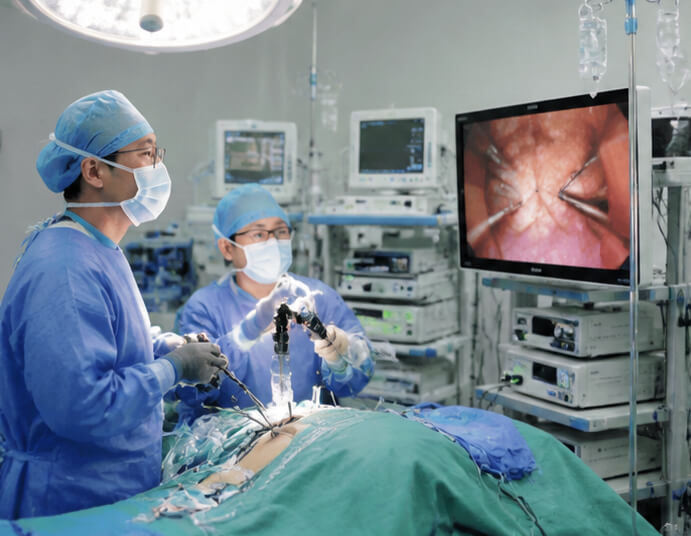
MVIV (Mitral Valve-in-Valve) — Delivering a new transcatheter valve through the femoral vein, across the atrial septum, and into the failing biological valve — all without opening the chest.
BATMAN (Balloon-Assisted Translocation of the Mitral Anterior Leaflet to Neutralize LVOT obstruction) — Before deploying the new valve, a specialized balloon catheter was used to physically displace the anterior mitral leaflet away from the outflow tract, expanding the LVOT space and eliminating the obstruction risk at its source.
This combined MVIV + BATMAN technique addressed both problems simultaneously:
- Replace the failed valve without open-heart surgery
- Prevent LVOT obstruction that would otherwise make transcatheter replacement impossible
The Procedure
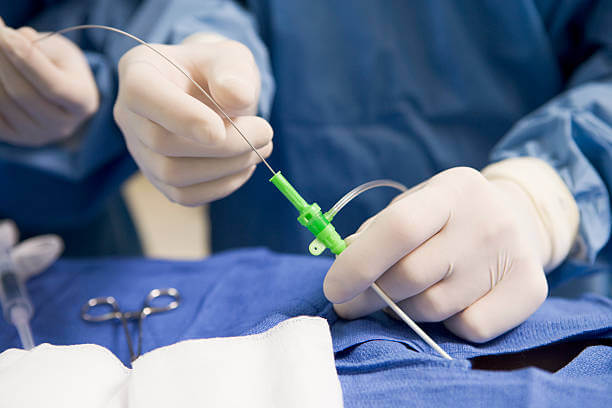
The entire operation was performed via the femoral vein — a puncture in the groin, with the catheter navigated through the venous system, across the interatrial septum, and into the mitral position.
- No chest incision
- No cardiopulmonary bypass
- No cardiac arrest
Post-deployment imaging confirmed: new valve functioning normally, zero LVOT obstruction, and immediate improvement in cardiac output.
Transcatheter vs. Repeat Open-Heart Surgery
| Factor | MVIV + BATMAN (West China) | Repeat Open-Heart Surgery |
|---|---|---|
| Incision | Femoral vein puncture (groin) | Full sternotomy (20-25 cm chest incision) |
| Cardiopulmonary bypass | Not required | Required (high-risk with pulmonary hypertension) |
| Adhesion risk | None — no chest entry | Extremely high from previous surgery |
| Procedure time | Shorter | 4-6+ hours |
| ICU stay | Minimal or none | Days to weeks |
| Recovery | Days | Weeks to months |
| LVOT obstruction risk | Eliminated by BATMAN technique | Managed surgically (adds complexity) |
Why This Matters for International Patients
Biological valve degeneration is a growing global problem. As more patients receive tissue valves (chosen because they avoid lifelong blood thinners), more will eventually face the question: what happens when the valve wears out?
For many — especially elderly patients, those with pulmonary hypertension, or those with heavily scarred chests from previous surgery — repeat open-heart surgery carries unacceptable risk. The MVIV + BATMAN combination offers these patients a way out that didn't exist before.
Mitral Valve Surgery Cost: China vs Western Countries
| Procedure | China (West China Hospital) | United States |
|---|---|---|
| Transcatheter mitral valve-in-valve (MVIV) | $25,000 - $45,000 | $100,000 - $200,000 |
| MVIV + BATMAN (combined) | $30,000 - $50,000 | Not widely available |
| Repeat open mitral valve replacement | $18,000 - $35,000 | $80,000 - $180,000 |
| Cardiac ICU (per day) | $500 - $1,200 | $5,000 - $15,000 |
China prices include procedure, transcatheter valve device, hospital stay, and post-operative monitoring.
About West China Hospital Cardiac Surgery
West China Hospital is consistently ranked among China's top 3 hospitals, and its cardiac surgery program is a national leader in structural heart interventions:
- Professor Hu Jia leads the cardiac and macrovascular surgery division with extensive experience in transcatheter valve therapies
- 4,300+ beds — One of the world's largest single-site hospitals
- Affiliated with Sichuan University — a top-10 Chinese university
- Located in Chengdu, with direct international flights from major global cities
Has your biological heart valve started failing? Don't assume repeat open-heart surgery is your only option. Explore advanced cardiac treatment in China →
Frequently Asked Questions
What is MVIV and why is it a breakthrough for patients with failed surgical valves?
Mitral Valve-in-Valve (MVIV) is a transcatheter procedure where a new valve is deployed inside a previously implanted surgical valve that has deteriorated. It avoids the need for a second open-heart surgery, which carries significantly higher risks than the original operation. West China Hospital's achievement of combining MVIV with the BATMAN technique represents a new frontier in treating complex valve disease without repeat sternotomy.
Am I too old or too sick for traditional heart valve redo surgery?
Many patients who are considered too high-risk for repeat open-heart surgery are excellent candidates for transcatheter approaches like MVIV. These procedures are performed through a small incision in the leg or chest, under sedation rather than full cardiac bypass. West China Hospital's heart team specializes in evaluating high-risk patients and finding the least invasive effective approach.
How long is the hospital stay for transcatheter mitral valve procedures?
Most patients are discharged within 3 to 5 days after transcatheter valve procedures, compared to 7 to 14 days for open-heart redo surgery. Recovery at home takes 2 to 4 weeks versus 2 to 3 months for open surgery. International patients should plan for approximately 10 to 14 days total in China, including pre-procedure evaluation and post-procedure follow-up.
What is the cost of transcatheter mitral valve procedures in China compared to the US?
Transcatheter mitral valve-in-valve procedures at West China Hospital cost approximately $30,000 to $50,000 including the device, procedure, and hospital stay, compared to $80,000 to $150,000 in the United States. For patients whose previous surgical valve has failed, this represents a significantly more affordable path to treatment.
How long is the recovery after a transcatheter mitral valve procedure?
Most patients are walking within 24 hours of the procedure and discharged from the hospital within 3 to 7 days. Full recovery typically takes 2 to 4 weeks, during which patients gradually increase their activity level. Compared to repeat open-heart surgery which requires 6 to 12 weeks of recovery, the transcatheter approach offers dramatically faster return to normal life.
Can I travel by airplane shortly after a transcatheter heart valve procedure?
Most patients can safely fly 2 to 3 weeks after a successful transcatheter valve procedure, once cleared by the treating cardiologist. A pre-flight echocardiogram is performed to confirm the valve is functioning well. SinomedTrip recommends booking flexible return flights and can arrange medical escort services for the journey home if needed.
Need a second opinion on valve disease or structural heart conditions? Request a free cardiac consultation →
This article is for informational purposes only and does not constitute medical advice. Always consult a qualified healthcare provider for diagnosis and treatment decisions.